
7 myths about ingrown toenails
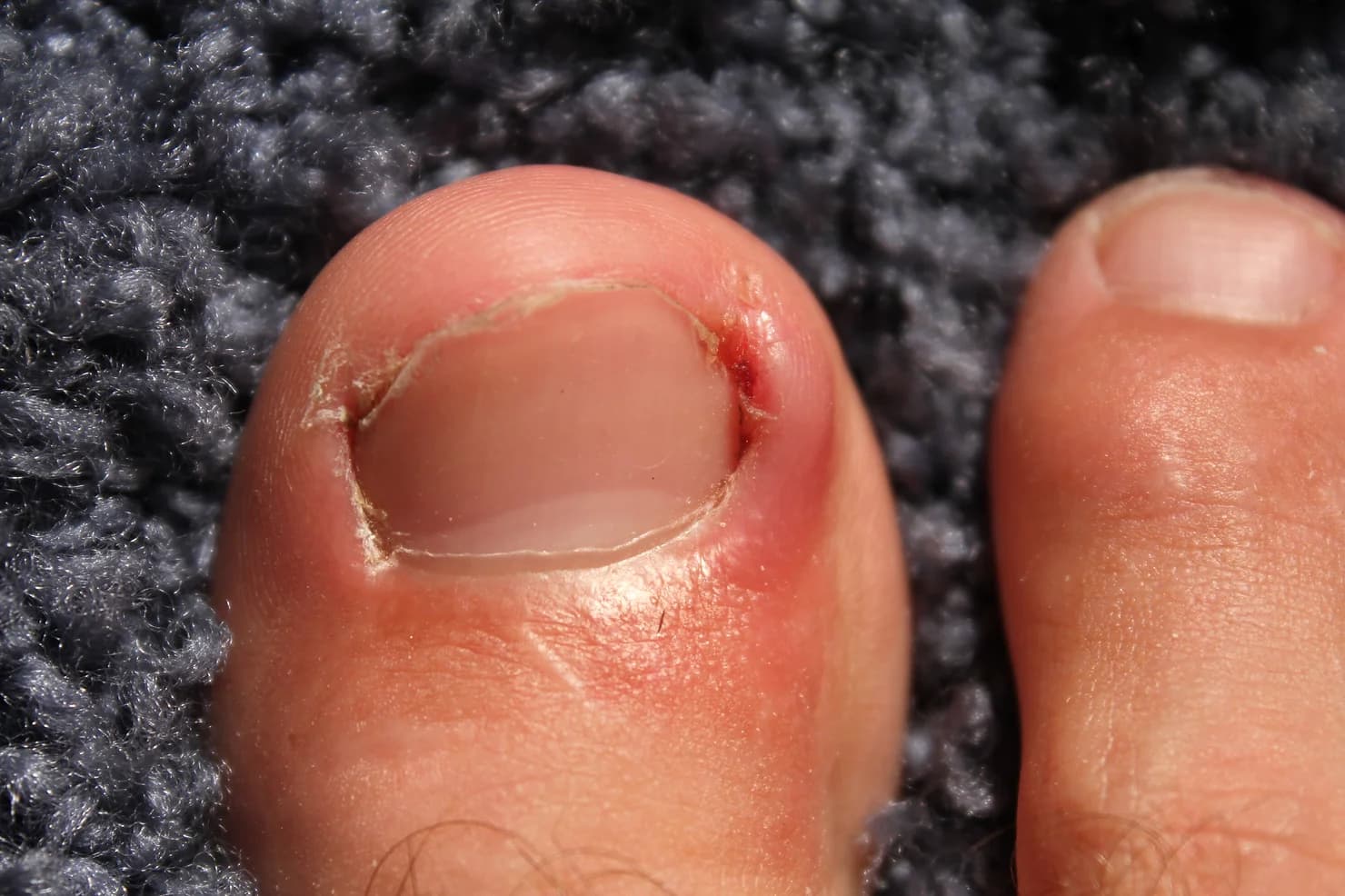
An ingrown toenail keeps hurting until the piece of nail digging into the skin is removed. Antibiotics or cutting a "V" won't fix it, but a simple procedure usually does.
An ingrown toenail happens when the side of the nail curls down and grows into the skin around it.¹ Often a sharp corner or splinter of nail (a spicule) pierces the skin. The toe becomes painful, red and swollen, and it can get infected.¹ There are plenty of home remedies and myths about ingrown toenails. Here are seven we hear often, and what actually fixes the problem.
Myth 1: Antibiotics will fix an ingrown toenail
Antibiotics treat bacterial infection, and an infected ingrown toenail may need them.¹,² But they don't remove the piece of nail that is causing the problem. While that spicule stays in the skin, the pain and infection are likely to continue or come back. Once the ingrown part of the nail is removed, the infection usually settles without antibiotics.³ With antibiotic resistance rising, it makes sense to fix the cause rather than rely on repeated courses.
Myth 2: Cutting a "V" into the nail will fix it
This is an old wives' tale. Foot surgeons advise against cutting a notch in the nail.⁴ A toenail grows forward from its base, so a notch at the tip doesn't change how the sides grow. It also tends to catch on socks and sheets.
Myth 3: Cutting down the sides of the nail will stop it happening
Cutting your toenails too short, or not straight across, is one of the common causes of ingrown toenails.¹ If you dig down the sides of the nail without the right tools, it's easy to leave a sharp point under the skin where you can't see it. As the nail grows, that point pushes further into the skin and can form a wound.
To help prevent ingrown toenails, cut your nails straight across, don't taper or round the corners, and don't cut them too short.¹,²
Myth 4: Only big toes get ingrown toenails
Ingrown toenails are most common on the big toe, but any toe can be affected.¹,²
Myth 5: A nail salon can treat an ingrown toenail
A beautician or pedicurist isn't trained to remove an ingrown nail from inside the skin, or to manage wounds and infection. Podiatrists are registered health professionals who treat ingrown toenails every day. We use sterile instruments, and we can numb the toe with a local anaesthetic first, so the procedure itself shouldn't hurt.²,⁴
Myth 6: Only people with oddly shaped nails get them
Naturally curved or fan-shaped nails do make ingrown toenails more likely,¹ but there are many other causes, including:
- a family tendency to ingrown nails⁴
- cutting your nails too short or rounding the corners¹
- tight shoes or socks¹,⁴
- stubbing or injuring the toe, or picking and tearing the nail¹
- sweaty feet, which make the skin softer¹
- fungal nail infections, which can thicken or widen the nail⁴,⁵
- some medicines, especially retinoid tablets such as isotretinoin.⁵
Ingrown toenails also become more common as we get older, because nails thicken with age.¹
Myth 7: The whole nail has to come off
Removing the whole nail is rarely needed. Usually only the narrow strip of nail that is growing into the skin needs to be removed.²,⁴
So how do we fix ingrown toenails?
The piece of nail growing into the skin needs to come out. How we do that depends on how severe the ingrown nail is and whether it's infected.
A recent or mild ingrown nail. Your podiatrist may be able to trim out the spicule in the clinic, with or without a local anaesthetic. We'll show you how to care for the toe and dress it afterwards.
A severe, infected or recurring ingrown nail. We can do a minor procedure under local anaesthetic to remove the edge of the nail that is growing into the skin.²,⁴ Applying a chemical called phenol to the nail root at the same time stops that strip from growing back. Adding phenol makes the problem much less likely to return than removing the nail edge alone.³,⁶ Once healed, the nail is a little narrower than before but usually looks normal. Most people are back to their usual activities within a day or so.⁴
Surgery works better than non-surgical methods at stopping an ingrown toenail coming back.⁶
If you're anxious about having your toe treated, tell us. We can talk you through your options, including having the procedure done under general anaesthetic in hospital if that suits you better.
When to see a podiatrist
See a podiatrist or GP if your toe is painful, red or swollen, if home care isn't helping, or if you see pus or have a fever.¹,² Don't wait if you have diabetes, poor circulation or nerve damage in your feet, because a small problem can quickly become serious.¹ An untreated infection can spread to the skin of the foot (cellulitis) or even the bone.¹
If you have an ingrown toenail, you can book an appointment with our podiatrists in Booragoon.
References
- healthdirect Australia (2025). Ingrown toenails. https://www.healthdirect.gov.au/ingrown-toenails
- NHS (2025). Ingrown toenail. https://www.nhs.uk/conditions/ingrown-toenail/
- Heidelbaugh JJ, Lee H (2009). Management of the ingrown toenail. American Family Physician, 79(4), 303–308. https://www.aafp.org/pubs/afp/issues/2009/0215/p303.html
- American College of Foot and Ankle Surgeons (n.d.). Ingrown toenail. FootHealthFacts.org. https://www.foothealthfacts.org/conditions/ingrown-toenail
- DermNet (n.d.). Ingrown toenail. https://dermnetnz.org/topics/ingrown-toenail
- Eekhof JAH, Van Wijk B, Knuistingh Neven A, van der Wouden JC (2012). Interventions for ingrowing toenails. Cochrane Database of Systematic Reviews, 2012(4), CD001541. https://doi.org/10.1002/14651858.CD001541.pub3
Reviewed by Andrew Schox, Podiatrist, BSc(Hons) PGradDipPod MPod. Last reviewed October 2026.
Need Professional Podiatry Care?
Our experienced team is here to help with all your foot and ankle concerns. Book an appointment today for expert diagnosis and treatment.
Book an AppointmentRelated Articles

Cortisone injections: relief for foot and ankle pain
A cortisone injection can calm a painful joint, bursa or nerve within days, and the relief often lasts weeks to months. It works best as one part of a wider treatment plan.
Why are my toenails unsightly?
Thick, discoloured or misshapen toenails are common. Fungal infection, injury, ageing, skin conditions and ingrown nails are the usual causes, and most can be treated or managed.

Why do I get calf muscle cramps?
Calf cramps are common and usually harmless, often linked to tired muscles, exercise or age. Cramping pain that comes on with walking and eases with rest is different and needs checking.