
Bunion surgery
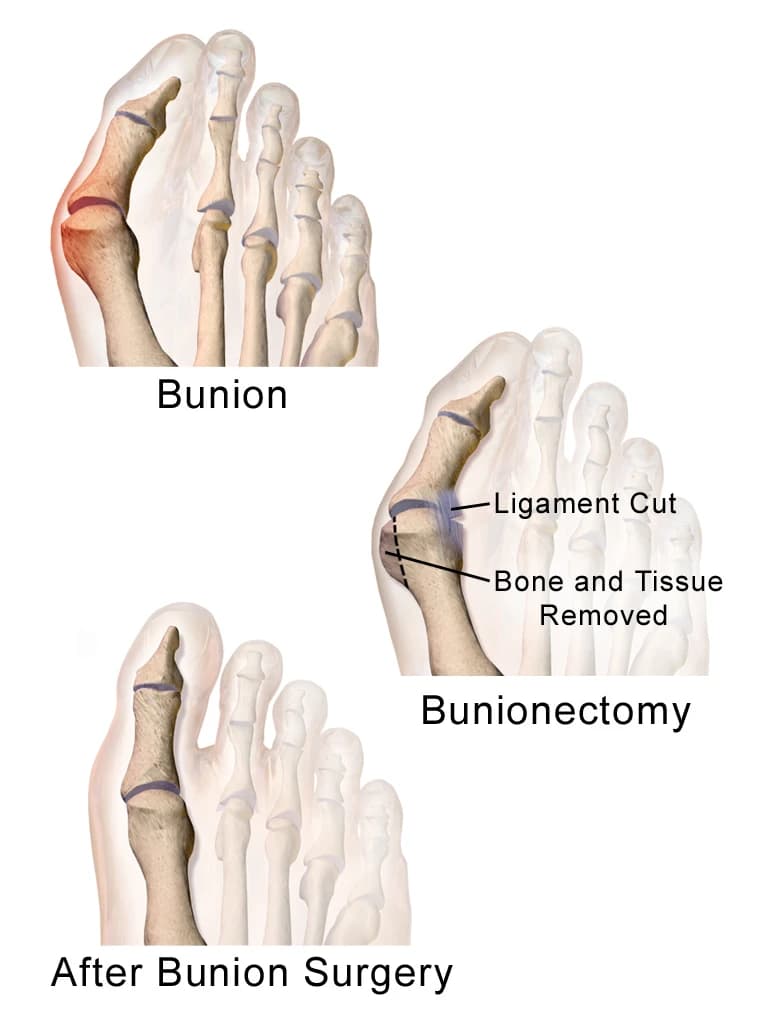
Bunion surgery realigns the big toe when a bunion stays painful despite other treatment. Most people go home the same day, but full recovery takes several months.
A bunion (hallux valgus) is a bony bump at the base of the big toe, where the toe leans across towards the other toes. Surgery can straighten the toe and ease the pain when other treatments haven't helped. It's a real commitment, though: recovery takes months, so it's worth knowing what's involved before you decide.
When is surgery an option?
Most people start with non-surgical treatment: wider shoes, padding to protect the bump, and orthoses (shoe inserts). These can ease pain, but they won't straighten the toe. Surgery may be offered if your bunion is very painful or is having a big effect on your life.¹ It isn't done just to improve how your feet look.¹
What does the operation involve?
There are several types of bunion surgery. The most common is an osteotomy.¹ Depending on your foot, the surgeon may:²
- remove the bony bump
- release tight ligaments and tighten stretched ones
- cut and realign the bones of the big toe, usually holding them in place with small screws or wires.
The right operation depends on how severe your bunion is. Sometimes the joint is fused (stiffened) instead, or other toes are straightened at the same time.²
Anaesthetic and hospital stay
Surgery is usually done under a general anaesthetic, but it can sometimes be done under a local anaesthetic, where you're awake but feel no pain.¹ The operation usually takes 30 minutes to an hour,² and most people go home the same day.¹ You may need to stay overnight, depending on your health.
Recovery
After surgery your foot will be bandaged, and you'll usually be given a special post-operative shoe or sandal to walk in. Some surgeons ask you to walk on your heel or flat foot for about six weeks.³ Rest and keep your foot raised as much as possible for at least the first two weeks, as this helps the swelling settle.¹,²
It often takes six weeks or more before the swelling has gone down enough to wear a normal soft shoe.² Some swelling can last for up to six months,² so you'll need roomy shoes for a while.
Returning to work, driving and exercise
Everyone's recovery is different, and your surgeon will tell you what's safe. As a guide:¹
- work: most people need 2–12 weeks off, depending on the job. You may be back sooner if you can work seated with your foot up; a physical job takes longer
- driving: expect not to drive for 6–8 weeks. You must be able to do an emergency stop safely, so check with your surgeon and your car insurer before you drive again
- sport: avoid sport for 3–6 months.
Once you're back in normal shoes, gradually walk further each day. Ask your surgeon or health team before you start exercising.²
Does it work?
For most people, surgery eases bunion pain and straightens the toe. It isn't guaranteed, though. Some toes won't be perfectly straight, and some people have ongoing pain or stiffness.¹ About 1 in 4 people are not satisfied with the result in the long term.⁴ Bunions can also come back after surgery.¹,²
What are the risks?
Possible complications include:¹,²,³
- infection, usually of the skin³
- stiffness or loss of movement in the big toe
- nerve damage, which can cause numbness
- the bone not healing properly, which may need another operation
- pain or stiffness lasting months or longer
- a blood clot in the leg (deep vein thrombosis)
- the bunion coming back.
How we can help
At Foot Ankle Lower Limb, we can help you manage a bunion without surgery, talk through whether surgery makes sense for you, and refer you for a surgical opinion if needed. After surgery, we can help with footwear, orthoses and getting you back to your usual activities.
If a bunion is affecting your life, book an appointment to discuss your options.
References
- NHS (2023). Bunions. https://www.nhs.uk/conditions/bunions/
- Healthdirect Australia (2026). Bunion surgery. https://www.healthdirect.gov.au/surgery/bunion-surgery
- Robert Jones and Agnes Hunt Orthopaedic Hospital NHS Foundation Trust (2023). Bunion surgery: information for patients. https://www.rjah.nhs.uk/media/t2pcaeus/bunion-surgery-leaflet-print-friendly-2023.pdf
- Chong A, Nazarian N, Chandrananth J, et al. (2015). Surgery for the correction of hallux valgus: minimum five-year results with a validated patient-reported outcome tool and regression analysis. The Bone & Joint Journal, 97-B(2), 208–214. https://doi.org/10.1302/0301-620X.97B2.34891
Reviewed by Andrew Schox, Podiatrist, BSc(Hons) PGradDipPod MPod. Last reviewed October 2026.
Need Professional Podiatry Care?
Our experienced team is here to help with all your foot and ankle concerns. Book an appointment today for expert diagnosis and treatment.
Book an AppointmentRelated Articles
Introducing new nail technology at FALL
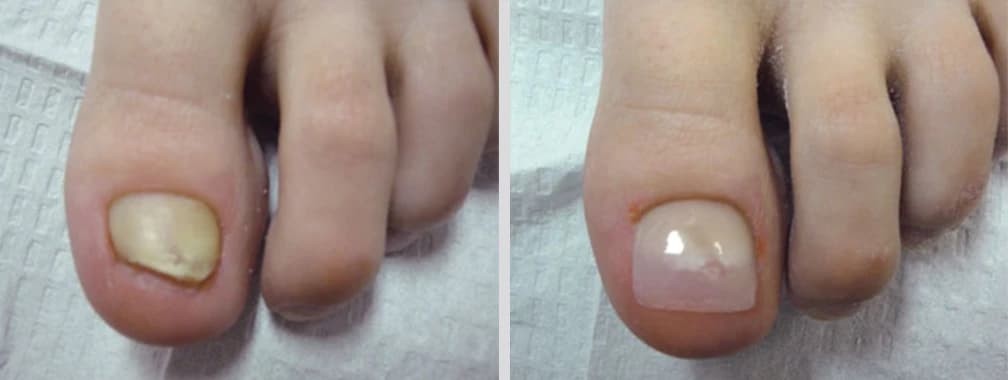
We offer two non-surgical nail options: Onyfix, a nail brace that can help ingrown or curved toenails, and Keryflex, a cosmetic nail restoration for damaged nails.

Diagnostic Ultrasound at FALL
We use a handheld ultrasound in the consulting room to look at tendons, the plantar fascia and other soft tissues while you're with us. It's painless and uses no radiation.
Shockwave therapy: a solution for chronic musculoskeletal conditions?
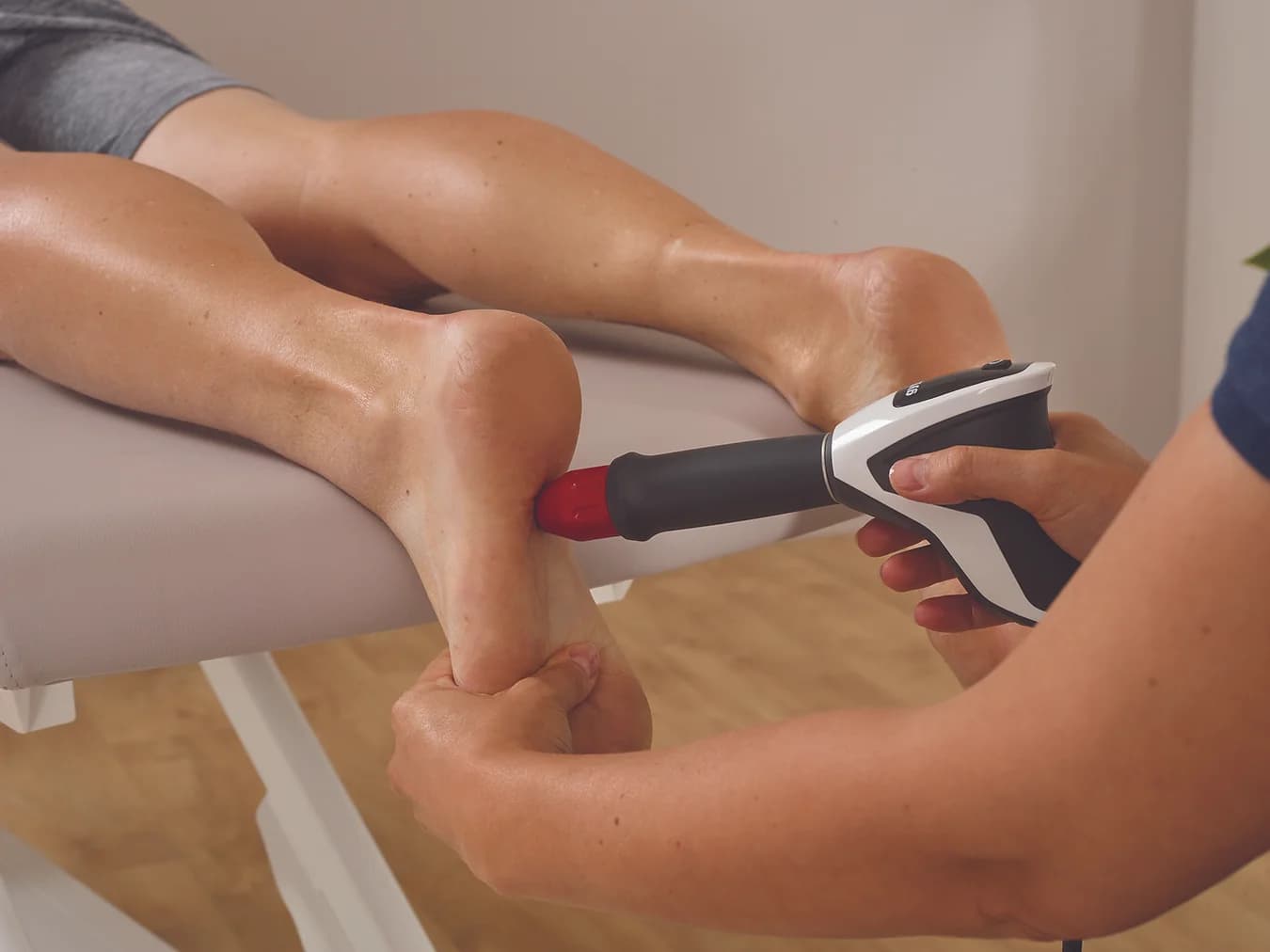
Shockwave therapy can help long-standing heel pain and Achilles tendon pain, especially alongside exercise. It isn't a cure-all, and the evidence for other conditions is weaker.