
Fungal nail infections
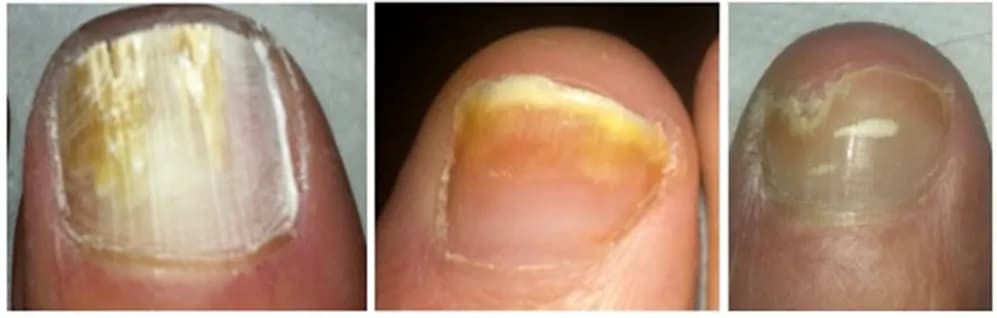
Fungal nail infections are common, slow to clear and often come back. Tablets work best, nail lacquers help milder cases, and good foot hygiene lowers the chance of reinfection.
Fungal nail infections are common, especially in toenails and in older people.¹ They aren't dangerous for most people, but they can be unsightly, uncomfortable and stubborn. Whatever treatment you choose, you'll need patience: nails grow slowly, so it takes months for a healthy nail to replace an infected one.
What is a fungal nail infection?
A fungal nail infection happens when a fungus grows on or in the nail. Its medical name is onychomycosis.¹ Fungal infections cause over half of all nail disease.²
Toenails are affected much more often than fingernails, probably because feet spend so much time in warm, dark, damp shoes. Infections become more common with age, and are common in people over 65.²
What causes it?
Most fungal nail infections are caused by a group of fungi called dermatophytes, the same fungi that cause tinea (athlete's foot).² Moulds and yeasts can occasionally be involved too.² A nail infection often starts when tinea on the skin of the foot spreads to the nail.¹ So if you have a fungal nail infection, there's a good chance the fungus is on your skin as well, even if the skin looks normal.
You can pick up tinea from the floors of showers and shared changing rooms, and from sharing towels, bath mats or shoes.³ Poorly cleaned nail tools in salons, and living with someone who has tinea or fungal nails, can also spread it.
You're more likely to get a fungal nail infection if you:¹,²
- have sweaty feet, or wear closed shoes for long periods
- injure your toenails often, for example through running or sports like netball and basketball
- have athlete's foot (tinea)
- have diabetes, psoriasis or a weakened immune system (including from medicines that suppress it)
- are older.
Signs and symptoms
An infected nail may:¹
- turn yellow, brown or white, or have white spots
- become thick, crumbly or misshapen
- lift away from the skin underneath (called onycholysis)
- be painful, or smell bad underneath.
The most common type starts at the tip or sides of the nail and spreads slowly back towards the cuticle. Less often, the infection starts at the base of the nail, and this type is more often linked with a weakened immune system.² Sometimes only the surface of the nail is affected, showing as white, flaky patches.²
How is it diagnosed?
A podiatrist or doctor can often recognise a fungal nail by looking at it. To confirm it, a sample of nail can be sent to a laboratory. Results may take 5–6 weeks.¹ A negative result doesn't always rule out a fungus, because some tests can miss it.² Nails that already have another problem, such as damage from injury, are more likely to become infected, so you can have a fungal infection and another nail problem at the same time.
Who should get treated?
Many people choose not to treat a fungal nail. Reasons to treat include:
- you don't like how the nail looks
- the nail is painful or uncomfortable, especially in shoes or during sport
- you have diabetes, poor circulation or a weakened immune system¹
- you've had foot or leg infections or ulcers before.
What can help?
Treatment doesn't always work, and the infection can come back. Even after successful treatment, the nail may not look normal for several months,¹ and a big toenail can take 12 months or more to grow out fully.
Nail care
Whatever treatment you choose, keeping the nail trimmed and thinned makes it look and feel better and reduces the amount of fungus. Your podiatrist can do this for you safely. A urea cream can soften a thick nail and make it easier to trim.
Tablets (oral antifungals)
Tablets are the most effective treatment, and most people with a toenail infection need them.¹,⁴ Terbinafine is the one most often used in Australia. It works better than other tablets, such as itraconazole, with a similar risk of side effects.⁴ Treatment usually takes 3–6 months.¹ Your doctor may arrange blood tests to check your liver while you take it.¹ Tablets need a prescription, so talk to your GP.
Nail lacquers and solutions (topical treatments)
Antifungal nail lacquers, such as amorolfine or ciclopirox, are painted onto the nail after filing it down. They can help, but they cure fewer nails than tablets.⁵ They suit milder infections near the tip of the nail better than infections that reach the base. They only work if you use them regularly until the healthy nail has grown out.
Antifungal creams and sprays, such as terbinafine cream, are good for tinea on the skin, but don't work well on nails on their own. Most other over-the-counter nail products aren't very effective.
Laser treatment
Laser treatment aims to heat and kill the fungus through the nail. It's painless and usually involves a few sessions over several months. Laser can clear the fungus and improve the look of the nail in many people, and it works better combined with an antifungal nail paint. Results vary with the type of laser used, and the strongest trials have mixed results.⁵ Read more about laser treatment for fungal nails.
Nail surgery
A badly damaged or painful nail can be removed, in part or in full, under local anaesthetic. Antifungal treatment afterwards may help stop it coming back.
Home remedies
There are many home remedies, such as vinegar, tea tree and other oils, bleach and hydrogen peroxide. Most have little evidence behind them, and bleach and peroxide can irritate the skin.
Will it come back?
Fungal nail infections often return. About 1 in 5 treated infections relapse.² Coming back doesn't always mean the treatment failed; you can pick up a new infection later. Reducing your risk factors is the best way to stop that happening:
- Wash your feet and dry them well, especially between your toes.³
- Change your socks every day,³ and wear shoes that let your feet breathe.¹
- Wash socks and towels hot. Washing at 60°C removes far more fungus than washing at 40°C.⁶
- Wear thongs or shoes in public showers and changing rooms.¹
- Don't share towels, shoes or nail tools.¹,³
- Rotate your shoes so each pair can dry out.
- Treat athlete's foot early with an antifungal cream from the pharmacy.³
- Keep your nails short and trimmed.¹ If you can't do this yourself, your podiatrist can.
When to see a podiatrist
See a podiatrist if your nail is painful, thick or changing shape, or if home care isn't helping. If you have diabetes or a weakened immune system, it's important to have a fungal nail checked by a podiatrist.¹
To have your nails assessed and talk through your options, book an appointment.
References
- healthdirect Australia (2024). Toenail infection. https://www.healthdirect.gov.au/toenail-infection
- DermNet. Fungal nail infections (onychomycosis). https://dermnetnz.org/topics/fungal-nail-infections
- healthdirect Australia (2025). Tinea. https://www.healthdirect.gov.au/tinea
- Kreijkamp-Kaspers S, Hawke K, Guo L, et al. (2017). Oral antifungal medication for toenail onychomycosis. Cochrane Database of Systematic Reviews, 7, CD010031. https://doi.org/10.1002/14651858.CD010031.pub2
- Foley K, Gupta AK, Versteeg S, et al. (2020). Topical and device-based treatments for fungal infections of the toenails. Cochrane Database of Systematic Reviews, 1, CD012093. https://doi.org/10.1002/14651858.CD012093.pub2
- Amichai B, Grunwald MH, Davidovici B, et al. (2013). The effect of domestic laundry processes on fungal contamination of socks. International Journal of Dermatology, 52(11), 1392–1394. https://doi.org/10.1111/ijd.12167
Reviewed by Andrew Schox, Podiatrist, BSc(Hons) PGradDipPod MPod. Last reviewed October 2026.
Need Professional Podiatry Care?
Our experienced team is here to help with all your foot and ankle concerns. Book an appointment today for expert diagnosis and treatment.
Book an AppointmentRelated Articles

Cortisone injections: relief for foot and ankle pain
A cortisone injection can calm a painful joint, bursa or nerve within days, and the relief often lasts weeks to months. It works best as one part of a wider treatment plan.

Why are my toenails unsightly?
Thick, discoloured or misshapen toenails are common. Fungal infection, injury, ageing, skin conditions and ingrown nails are the usual causes, and most can be treated or managed.

Why do I get calf muscle cramps?
Calf cramps are common and usually harmless, often linked to tired muscles, exercise or age. Cramping pain that comes on with walking and eases with rest is different and needs checking.