
Hammer toes and mallet toes
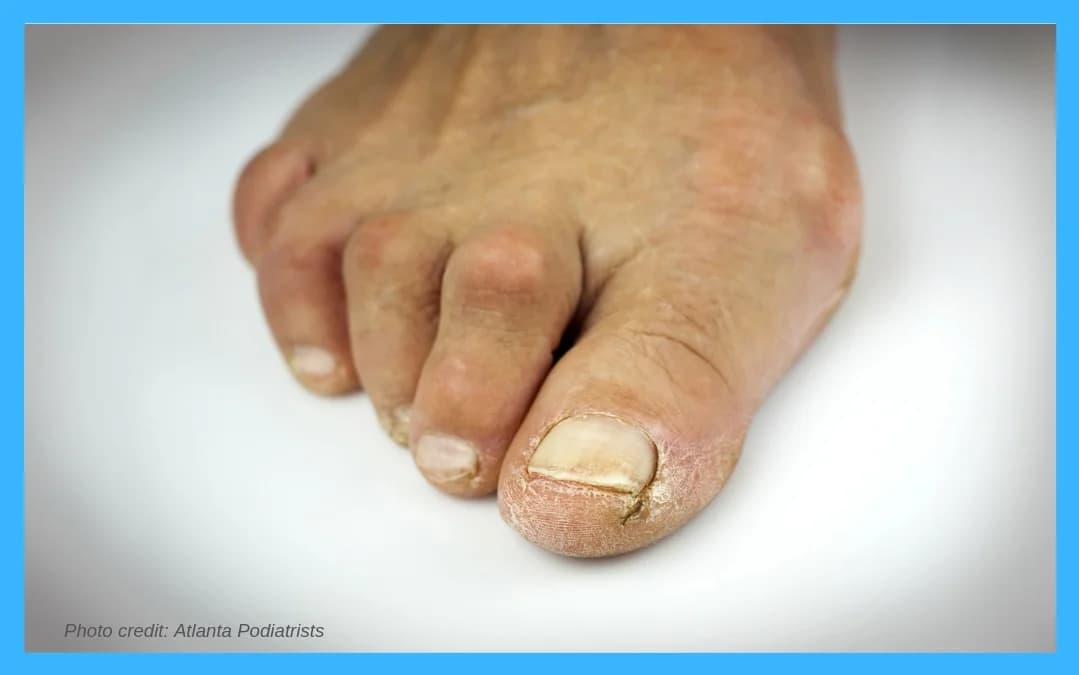
Hammer and mallet toes are bent smaller toes that can rub and form corns. Roomy shoes and padding often ease the pain, and surgery can straighten a toe if they don't help.
Hammer toes and mallet toes are bent toes that usually affect the smaller toes, not the big toe. They can rub on your shoes and form painful corns. Many people manage well with the right shoes and padding, and surgery can straighten a toe that keeps causing trouble.
What are hammer toes and mallet toes?
They happen when the muscles, tendons and ligaments that normally hold a toe straight get out of balance.
- A hammer toe bends down at the middle joint of the toe, so that joint sticks up.¹ It's most common in the second toe.²
- A mallet toe bends down at the joint closest to the tip of the toe.¹
- A claw toe bends up where the toe meets the foot and down at the joints further along, so the toe curls under.¹ Claw toes often affect several toes at once.
A bent toe may also tuck under, or cross over, the toe next to it. At first the toe can usually still be straightened by hand (a flexible deformity). Over time it can become stiff and fixed.³
What causes it?
Several things can contribute:
- Shoes: tight shoes, narrow toe boxes and high heels are common causes, because they push the toes into a bent position.¹
- Bunions: a big toe that leans across can crowd the smaller toes out of line. Lesser toe deformities often develop with a bunion.³
- Other conditions: inflammatory arthritis such as rheumatoid arthritis, nerve and muscle conditions, and nerve damage from diabetes can upset the balance of the toe muscles.²
- Injury to the toe.
Signs and symptoms
- a toe that's bent at one or more joints
- pain, especially in shoes
- corns or hard skin on top of the bent joint or on the tip of the toe¹,²
- pain and hard skin under the ball of the foot
- redness and swelling around the joint, or a stiff toe²
- difficulty finding shoes that fit.¹
What can help?
Non-surgical care aims to ease pain and stop the toe getting worse.
- Shoes: choose shoes with a deep, roomy toe box and a low heel.¹
- Padding and protection: foam toe tubes, toe props and soft splints can protect corns or lift the tip of the toe off the ground.³
- Corn and callus care: your podiatrist can safely remove painful corns and hard skin.
- Orthoses and exercises: shoe inserts can take pressure off the ball of the foot, and toe exercises may help keep a flexible toe moving.
What about surgery?
Surgery may be an option if other treatments don't control your pain, if your toe limits what you can do, or if the joint has become fixed.¹ The type of operation depends on how stiff the toe is:³
- Tenotomy (tendon release): the tight tendon is cut so the toe can straighten. This is usually enough for a flexible toe.
- Arthroplasty: a small piece of bone is removed from the bent joint.
- Arthrodesis (joint fusion): for stiff, fixed toes. The joint surfaces are removed and the bones are joined in a straight position. A fine wire through the toe holds it while it heals, and is usually removed at about six weeks.³
What is recovery like?
Recovery varies with the procedure and with you, so your surgeon will give you specific advice. As a general guide:³
- Anaesthetic: surgery is usually a day procedure, done either under general anaesthetic or with the foot numbed by an ankle block while you're awake.
- Rest: keep the foot raised above hip level as much as possible for the first two weeks.
- Footwear: you'll wear a flat, stiff-soled post-operative shoe, often for around six weeks.
- Work: with a desk job where you can raise your foot, you may be back from about two weeks. A physically demanding job may take up to three months.
- Driving: after surgery on the left foot in an automatic car, you can usually drive from about two weeks. Otherwise, allow six to eight weeks.
- Swelling: the toe can stay swollen for many weeks.
Possible complications
Complications aren't common, but they can happen with any surgery:³
- Infection: minor infections usually settle with a short course of antibiotics.
- Nerve irritation: numbness or a sensitive patch on the toe is usually temporary but can be permanent.
- Stiffness or ongoing pain in the toe.
- The deformity coming back, which is rare.
Smoking slows wound healing. If you smoke, stopping for even three weeks before surgery helps wounds heal.⁴
When to see a podiatrist
See a podiatrist if a bent toe is painful, keeps forming corns or makes it hard to find shoes. Get checked promptly if you have diabetes, poor circulation or reduced feeling in your feet, because a corn or rub on a bent toe can turn into a wound.
To talk about your toes, book an appointment with our podiatrists. If surgery might help, we can discuss a referral for a surgical opinion.
References
- Healthwise Staff (2026). Hammer, claw, and mallet toes. Healthwise, via ColumbiaDoctors Health Library. https://www.columbiadoctors.org/health-library/condition/hammer-claw-mallet-toes/
- Bradford District Care NHS Foundation Trust. Pain in your toe or the ball of your foot: lesser toe deformities. https://www.bdct.nhs.uk/pain-in-your-toe-or-the-ball-of-your-foot-lesser-toe-deformities/
- Royal National Orthopaedic Hospital NHS Trust. A patient's guide to bunion (hallux valgus) and lesser toe deformities. https://www.rnoh.nhs.uk/patients-and-visitors/patient-information-guides/bunion-hallux-valgus-and-lesser-toe-deformities
- Australian and New Zealand College of Anaesthetists. Anaesthesia and smoking. https://www.anzca.edu.au/patient-information/about-anaesthesia/anaesthesia-and-smoking
Reviewed by Andrew Schox, Podiatrist, BSc(Hons) PGradDipPod MPod. Last reviewed October 2026.
Need Professional Podiatry Care?
Our experienced team is here to help with all your foot and ankle concerns. Book an appointment today for expert diagnosis and treatment.
Book an AppointmentRelated Articles

Cortisone injections: relief for foot and ankle pain
A cortisone injection can calm a painful joint, bursa or nerve within days, and the relief often lasts weeks to months. It works best as one part of a wider treatment plan.
Why are my toenails unsightly?
Thick, discoloured or misshapen toenails are common. Fungal infection, injury, ageing, skin conditions and ingrown nails are the usual causes, and most can be treated or managed.
Why do I get calf muscle cramps?
Calf cramps are common and usually harmless, often linked to tired muscles, exercise or age. Cramping pain that comes on with walking and eases with rest is different and needs checking.