
Stiff big toe (hallux rigidus)
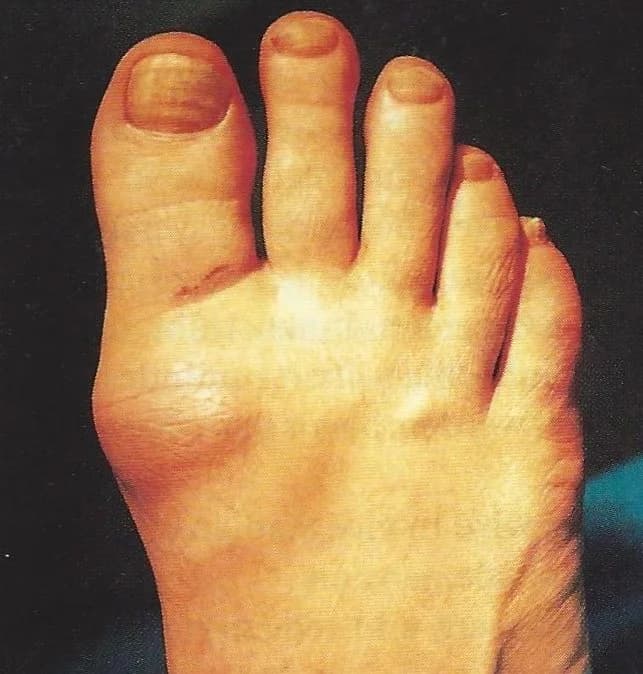
Hallux rigidus is arthritis of the big toe joint, causing pain and stiffness when you walk. Stiff-soled shoes and padding can help, and surgery is an option if they don't.
Hallux rigidus is arthritis of the joint at the base of your big toe. It makes the toe stiff and painful, especially when you walk or run.¹ It's a common cause of foot pain as people get older, and there are practical ways to make it more comfortable.
What is hallux rigidus?
"Hallux" is Latin for big toe and "rigidus" means stiff.¹ The joint at the base of the big toe (the first metatarsophalangeal joint) bends every time you push off when walking. In hallux rigidus, wear and tear in this joint makes it stiff and painful.¹ When the joint is stiff but still has some movement, it's sometimes called hallux limitus. Over time, the joint can lose more movement.
Arthritis in the big toe joint is common. About 1 in 13 adults aged 50 and over has painful arthritis in this joint that shows on an x-ray.²
What causes it?
The most common cause is osteoarthritis (wear and tear).¹ Rheumatoid arthritis, gout and, rarely, infection can also cause pain in the big toe joint.¹ Hallux rigidus can affect anyone, but it's more likely in people who are active and play sport regularly.¹ Arthritis in the foot is also more common in women and becomes more common with age.²
Signs and symptoms
Symptoms can include:
- pain in the big toe joint, especially when walking or running¹
- stiffness, mostly when bending the toe upwards as you push off¹
- a bony lump on top of the joint, which can rub on shoes¹
- changes to the way you walk, as you try to avoid bending the toe.
The lump in hallux rigidus is on top of the joint. In a bunion, the bump is on the inner side of the foot.¹
What can help?
Footwear. Shoes with a firm, stiff sole reduce how much the toe has to bend, and can ease symptoms.¹ A deep, roomy toe box stops shoes pressing on the lump. Some people find rocker-sole shoes (with a curved sole that rolls you forward) help.³
Padding. Silicone or other soft pads can cushion a tender lump on top of the joint.¹
Shoe inserts (orthoses). Inserts and rocker-sole shoes can ease pain for some people, and inserts tend to be easier to wear.³ But in trials, inserts haven't clearly worked better than fake (sham) inserts.⁴ So they're worth trying, but they're not a sure thing.
Pain relief. Ask your pharmacist or GP whether pain relief medicine is suitable for you.
Injections. Some surgeons offer a manipulation of the joint under anaesthetic with a steroid injection. This eases pain for about half of people for up to two years, but it doesn't cure the arthritis.¹ Injections of hyaluronic acid (a gel-like lubricant) don't seem to help.⁴
Overall, the evidence for non-surgical treatments is limited.⁴ Your podiatrist can help you work out what's worth trying first.
Surgery. If pain is affecting your daily life and other treatments haven't helped, a foot and ankle surgeon may suggest one of two main operations:¹
- Cheilectomy: removing the extra bump of bone on top of the joint. This can increase movement and ease pain, especially in less severe arthritis, but it doesn't cure the arthritis.¹
- Fusion (arthrodesis): joining the bones of the joint so they can't move. This turns a stiff, painful joint into a totally stiff but painless one.¹ Recovery takes longer, and you won't be able to wear high heels afterwards.¹
What to expect at FALL
We'll examine your foot, check how much the joint moves, and watch how you walk. We may arrange an x-ray to see how much the joint has changed. We'll then suggest a plan that may include footwear changes, padding and orthoses. If surgery is worth considering, we can refer you to a foot and ankle surgeon.
When to see a podiatrist
See a podiatrist or GP if your big toe joint is painful or stiff and it's affecting your walking, your exercise or the shoes you can wear.
Get it checked sooner if:
- the joint is suddenly red, hot and swollen, which could be gout or an infection¹
- you have diabetes, poor circulation or a weakened immune system
- the lump on your toe has broken skin or a sore.
If your big toe is stiff or sore, book an appointment with our podiatrists.
References
- Royal National Orthopaedic Hospital NHS Trust (2026). A patient's guide to arthritis of the big toe (hallux rigidus) with discussions on cheilectomy and fusion. https://www.rnoh.nhs.uk/patients-and-visitors/patient-information-guides/arthritis-big-toe-hallux-rigidus-discussions-cheilectomy-and-fusion
- Roddy E, Thomas MJ, Marshall M, et al. (2015). The population prevalence of symptomatic radiographic foot osteoarthritis in community-dwelling older adults: cross-sectional findings from the clinical assessment study of the foot. Annals of the Rheumatic Diseases, 74(1), 156–163. https://doi.org/10.1136/annrheumdis-2013-203804
- Menz HB, Auhl M, Tan JM, et al. (2016). Effectiveness of foot orthoses versus rocker-sole footwear for first metatarsophalangeal joint osteoarthritis: randomized trial. Arthritis Care & Research, 68(5), 581–589. https://doi.org/10.1002/acr.22750
- Munteanu SE, Buldt A, Lithgow MJ, et al. (2024). Non-surgical interventions for treating osteoarthritis of the big toe joint. Cochrane Database of Systematic Reviews, 6, CD007809. https://doi.org/10.1002/14651858.CD007809.pub3
Reviewed by Andrew Schox, Podiatrist, BSc(Hons) PGradDipPod MPod. Last reviewed October 2026.
Need Professional Podiatry Care?
Our experienced team is here to help with all your foot and ankle concerns. Book an appointment today for expert diagnosis and treatment.
Book an AppointmentRelated Articles

Cortisone injections: relief for foot and ankle pain
A cortisone injection can calm a painful joint, bursa or nerve within days, and the relief often lasts weeks to months. It works best as one part of a wider treatment plan.
Why are my toenails unsightly?
Thick, discoloured or misshapen toenails are common. Fungal infection, injury, ageing, skin conditions and ingrown nails are the usual causes, and most can be treated or managed.
Why do I get calf muscle cramps?
Calf cramps are common and usually harmless, often linked to tired muscles, exercise or age. Cramping pain that comes on with walking and eases with rest is different and needs checking.