
Tarsal tunnel syndrome
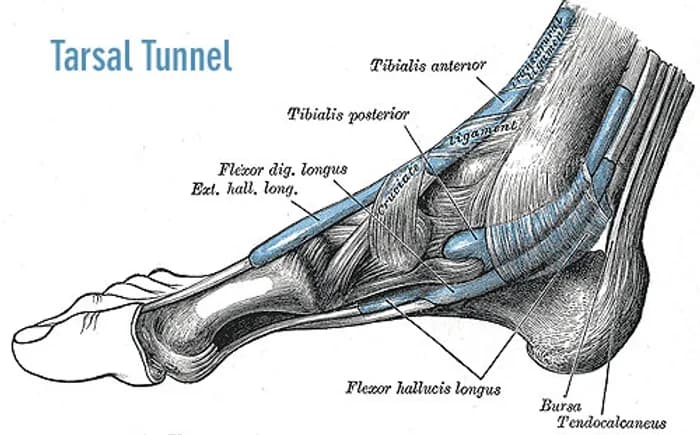
Tarsal tunnel syndrome is a pinched nerve on the inside of the ankle that causes burning, tingling or numbness in the sole. Insoles, footwear changes and rest often help.
Tarsal tunnel syndrome is a pinched nerve on the inside of the ankle. It causes burning, tingling, numbness or shooting pain in the sole of the foot. It's not common, and it's easy to mistake for other causes of foot pain, so a careful examination is the key to getting the right diagnosis and treatment.
What is tarsal tunnel syndrome?
The tibial nerve runs down the back of your leg and passes through a narrow space on the inside of the ankle, called the tarsal tunnel, under a tough band of tissue (the flexor retinaculum). It then splits into branches that supply feeling to the heel and sole, and control some of the small muscles in the foot.¹,²
If the nerve is squeezed or irritated in this tunnel, it's called tarsal tunnel syndrome.¹ It's similar to carpal tunnel syndrome in the wrist. It's a rare condition that is often missed.³
What causes it?
Anything that takes up space in the tunnel, or stretches the nerve, can cause it. Common causes include:
- flat feet: when the heel rolls in, the shape of the rearfoot can stretch and squash the nerve¹,²
- injury and swelling: inflammation after an ankle sprain or fracture, or from overused tendons nearby¹,²
- a lump pressing on the nerve, such as a cyst (ganglion)¹
- other conditions that cause swelling, such as arthritis (including rheumatoid arthritis and gout), an underactive thyroid, or ankle swelling from heart or kidney problems.²
Sometimes no clear cause is found.
Signs and symptoms
Symptoms are felt mainly on the sole of the foot and can include:¹,²
- burning, tingling or "pins and needles"
- numbness
- shooting or electric-shock pains, which can spread into the arch and toes
- pain that's worse when standing or walking, or in certain shoes, and eases with rest.
As the condition progresses, pain can also happen at rest.²
How is it diagnosed?
Diagnosis is mainly based on a careful history and examination.³ Your podiatrist will check for tenderness over the nerve and whether gently tapping on the inside of the ankle sends tingling into the foot (Tinel's sign).¹ We also check your foot posture, footwear and other possible causes, such as nerve damage from diabetes or a problem in the back.
Tests can help but don't always give a clear answer. If symptoms don't improve, you may be referred for an ultrasound or MRI to look for something pressing on the nerve,¹,² or for nerve conduction studies. These nerve tests can be normal even when the condition is present.³
What can help?
Most people start with non-surgical care, although there's limited good research on which treatments work best:⁴
- Reduce aggravating activity for a while, and walk on flat ground where you can.¹
- Footwear: avoid completely flat shoes. A small heel (about 2 cm) can reduce pressure on the nerve.¹
- Orthoses (insoles): these change the position of the rearfoot and can relieve pressure on the nerve.¹,²
- Taping or bracing to support the foot and ankle.
- Medicines: anti-inflammatory medicines may help reduce swelling around the ankle.¹ Check with your pharmacist or GP first.
- Injections: an injection of corticosteroid and local anaesthetic around the nerve can ease symptoms.²
Surgery
If symptoms continue despite non-surgical treatment, surgery to release the pressure on the nerve may be recommended.¹,² It can work well in carefully selected people, especially when it's done before the nerve is permanently damaged.³ We can refer you to a surgeon for an opinion.
When to see a podiatrist
See a podiatrist if you have burning, tingling or numbness in your foot that doesn't settle, or that's getting worse. Get checked promptly if you have diabetes, if you notice weakness in your foot, or if you have numbness in both feet, as these can point to other nerve problems.
To find out what's behind your foot symptoms, book an appointment with our podiatrists.
References
- Kent Community Health NHS Foundation Trust (2025). Tarsal tunnel syndrome. https://www.kentcht.nhs.uk/leaflet/tarsal-tunnel-syndrome-2/
- Connors JC (2025). Tarsal tunnel syndrome. MSD Manual Consumer Version. https://www.msdmanuals.com/home/bone-joint-and-muscle-disorders/foot-and-ankle-problems/tarsal-tunnel-syndrome
- Ahmad M, Tsang K, Mackenney PJ, Adedapo AO. (2012). Tarsal tunnel syndrome: a literature review. Foot and Ankle Surgery, 18(3), 149–152. https://doi.org/10.1016/j.fas.2011.10.007
- McSweeney SC, Cichero M. (2015). Tarsal tunnel syndrome: a narrative literature review. The Foot, 25(4), 244–250. https://doi.org/10.1016/j.foot.2015.08.008
Reviewed by Andrew Schox, Podiatrist, BSc(Hons) PGradDipPod MPod. Last reviewed October 2026.
Need Professional Podiatry Care?
Our experienced team is here to help with all your foot and ankle concerns. Book an appointment today for expert diagnosis and treatment.
Book an AppointmentRelated Articles

Cortisone injections: relief for foot and ankle pain
A cortisone injection can calm a painful joint, bursa or nerve within days, and the relief often lasts weeks to months. It works best as one part of a wider treatment plan.

Why are my toenails unsightly?
Thick, discoloured or misshapen toenails are common. Fungal infection, injury, ageing, skin conditions and ingrown nails are the usual causes, and most can be treated or managed.

Why do I get calf muscle cramps?
Calf cramps are common and usually harmless, often linked to tired muscles, exercise or age. Cramping pain that comes on with walking and eases with rest is different and needs checking.