
Wart is this on my foot? Plantar warts (verruca pedis)
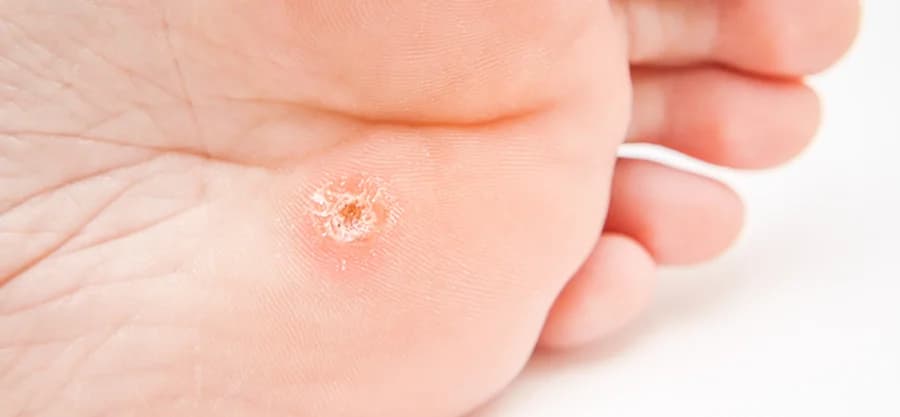
Plantar warts are caused by a virus and often go away on their own, though it can take up to two years. If one hurts or won't clear, there are several treatments to try.
A plantar wart (also called a verruca, or verruca pedis) is a wart on the sole of the foot. Warts are caused by a virus. They're harmless and often go away on their own, but they can be painful, slow to clear and easy to confuse with a corn. Here's how to recognise one and what you can do about it.
What is a plantar wart?
Plantar warts appear on the sole, heel or toes.¹ They're caused by the human papillomavirus (HPV).¹ Because you stand on them, your body weight pushes the wart into the skin, so it often looks flat and is covered with hard skin.¹ Plantar warts look like small, hard bumps, and they can have tiny black dots in them.²
Warts can look a lot like corns or calluses, which are caused by pressure, not a virus. If you're not sure which you have, a podiatrist can tell the difference and treat it accordingly.
How do you catch them?
You can pick up the virus by direct contact with another person's wart, or from contaminated surfaces such as the floors of showers and changing rooms.¹ Damaged skin and swimming in public pools increase the risk.² Scratching or picking a wart can spread it to other parts of your body.²
Will it go away on its own?
Often, yes. In children, about half of all warts go away within 6 months without treatment, and about 9 in 10 within 2 years.¹ Warts tend to take longer to clear in adults.¹ If a wart isn't painful or bothering you, it's reasonable to leave it alone and let your immune system deal with it.
What can help?
Treatment makes sense if a wart is painful, spreading or you'd like it gone sooner. No treatment works every time, and most take weeks to months.
- Salicylic acid (wart paints and gels): these soften and gradually remove the wart. You apply them every day, often for many weeks.¹,² They're available from pharmacies.
- Freezing (cryotherapy): a very cold liquid freezes the wart and destroys the infected skin cells.¹ It usually needs repeat treatments a few weeks apart. It can be painful and may blister.
- Laser: lasers can be used to treat warts,¹,² but the evidence for them is limited.³
- Surgical removal: the wart can be scraped or cut out under local anaesthetic (curettage).² This is usually kept for stubborn or very painful warts, or when you need it gone quickly.
How well do these work? Salicylic acid and freezing work about as well as each other for plantar warts,⁴ and the evidence for salicylic acid is the most consistent, though its effect is modest.³ Combining them may work a little better than salicylic acid alone.³ Duct tape doesn't seem to help.³
At Foot Ankle Lower Limb we can offer acid treatments, freezing, Swift microwave therapy and surgical removal in our clinic. We'll talk through which is best for your wart, your age and your health.
How can I stop warts spreading?
- Don't pick or scratch your wart.¹
- Cover it with a waterproof dressing or tape when swimming.
- Wear thongs in public showers, pools and changing rooms.¹
- Don't share shoes, socks or towels, and change your socks every day.¹
- Keep your shower floor clean.¹
- Use a pad to ease pressure on a painful wart.
When to see a podiatrist
See a podiatrist or GP if your wart is painful, looks infected or is spreading, or if you have a weakened immune system.¹ It's also worth getting checked if you're not sure it's a wart, or if it bleeds or changes in appearance. If you have diabetes or poor circulation, talk to a podiatrist or GP before using wart treatments yourself, as acids and freezing can damage the skin.
To have a wart checked and treated, book an appointment with our podiatrists.
References
- healthdirect Australia (2025). How to treat warts. https://www.healthdirect.gov.au/wart-treatments
- Better Health Channel, Victorian Department of Health. Warts. https://www.betterhealth.vic.gov.au/health/conditionsandtreatments/warts
- Kwok CS, Gibbs S, Bennett C, et al. (2012). Topical treatments for cutaneous warts. Cochrane Database of Systematic Reviews, 9, CD001781. https://doi.org/10.1002/14651858.CD001781.pub3
- Cockayne S, Hewitt C, Hicks K, et al. (2011). Cryotherapy versus salicylic acid for the treatment of plantar warts (verrucae): a randomised controlled trial. BMJ, 342, d3271. https://doi.org/10.1136/bmj.d3271
Reviewed by Andrew Schox, Podiatrist, BSc(Hons) PGradDipPod MPod. Last reviewed October 2026.
Need Professional Podiatry Care?
Our experienced team is here to help with all your foot and ankle concerns. Book an appointment today for expert diagnosis and treatment.
Book an AppointmentRelated Articles

Cortisone injections: relief for foot and ankle pain
A cortisone injection can calm a painful joint, bursa or nerve within days, and the relief often lasts weeks to months. It works best as one part of a wider treatment plan.
Why are my toenails unsightly?
Thick, discoloured or misshapen toenails are common. Fungal infection, injury, ageing, skin conditions and ingrown nails are the usual causes, and most can be treated or managed.
Why do I get calf muscle cramps?
Calf cramps are common and usually harmless, often linked to tired muscles, exercise or age. Cramping pain that comes on with walking and eases with rest is different and needs checking.