
Lateral ankle repair

If your ankle keeps giving way despite a good rehab program, surgery to tighten the outer ankle ligaments can restore stability. Here's what's involved and how long recovery takes.
Some people who sprain an ankle are left with an ankle that keeps rolling or "giving way". Most improve with a good exercise and balance program. If yours doesn't, an operation to repair the ligaments on the outside of the ankle can make it stable again. Here's what lateral ankle repair involves, and what recovery looks like.
What is lateral ankle instability?
Most ankle sprains damage the ligaments on the outside (lateral side) of the ankle, which are weaker than those on the inside. Up to 40% of people who sprain their ankle for the first time go on to develop chronic ankle instability.¹ That means that a year or more after the first sprain, they keep spraining the ankle, feel it giving way, or still have pain, swelling or weakness.¹ It often gives way on uneven ground or when changing direction quickly.²
It can follow repeated mild to moderate sprains, or one severe sprain.
Do I need surgery?
Usually not. In most cases, chronic ankle instability improves with physiotherapy: exercises to strengthen the ankle and train your balance.²,⁵ A brace or taping can also help during sport. Our podiatrists can assess your ankle and help with this rehab.
Surgery is considered when a proper rehab program hasn't fixed the instability, pain and other problems.²,⁴
What does the operation involve?
The most common operation is called a Broström repair, often in a modified form known as the Broström-Gould procedure.³ The surgeon:
- makes a cut over the outside of the ankle
- finds the stretched ligaments, then shortens and tightens them with stitches, sometimes using small anchors fixed into the bone
- stitches extra tissue over the repair to strengthen it.²
In some cases, if the ligament tissue is poor, a strip of tendon is used as a graft instead.² Some surgeons do the repair through keyhole (arthroscopic) surgery.³
What is recovery like?
Recovery takes several months, and the details vary with each surgeon. As a guide:²
- You'll be in a plaster cast or boot for about six weeks, and may be allowed to start putting some weight through the leg after about two weeks.
- After that you may wear an ankle brace for up to another eight weeks.
- Physiotherapy usually starts 4–6 weeks after surgery, to reduce swelling and rebuild movement, strength and balance.
Going back to work
If your job is mostly sitting and you can keep your leg up, you may be back at work after about four weeks. A physical job, or one with long periods on your feet, may take longer.²
Driving
If you drive an automatic and the operation was on your left ankle, you can usually drive by about four weeks. Otherwise it may take about two months.² You must be able to do an emergency stop safely before you drive.
Sport
You can usually return to low-impact sport 3–6 months after surgery. Getting back to high-impact sport can take up to a year.²
Does it work?
For most people, yes. The Broström-Gould repair is the usual operation when rehab hasn't worked.³ After it, the ankle becomes unstable again in only about 3 in 100 people.⁴ Keyhole and open repairs give similar results,³ and there's no strong evidence that any one type of operation is better than another.⁵
Getting moving early with guided rehab after surgery seems to restore function sooner than six weeks in a cast,⁵ so follow your surgeon's and physio's plan closely.
What are the risks?
About 1 in 10 people have some kind of complication after the operation.⁴ Possible problems include:
- numbness or sensitivity near the scar, from small skin nerves being cut or stretched. This can be permanent²
- wound infection, which usually settles with antibiotics²,⁴
- slow wound healing, which is more likely if you smoke or have diabetes or poor circulation²
- ongoing pain, or the ankle becoming unstable again⁴
- blood clots in the leg or lungs, which are rare.²
When to see a podiatrist
See a podiatrist if your ankle keeps rolling or giving way, or you still have pain and swelling months after a sprain. We can check your ankle, start an exercise and balance program, and refer you to a surgeon if that's the right next step.
If your ankle doesn't feel stable, book an appointment with our podiatrists in Booragoon.
References
- Hertel J, Corbett RO (2019). An updated model of chronic ankle instability. Journal of Athletic Training, 54(6), 572–588. https://doi.org/10.4085/1062-6050-344-18
- Royal National Orthopaedic Hospital NHS Trust (2025). Lateral ligament reconstruction (ankle). https://rnoh.nhs.uk/patients-and-visitors/patient-information-guides/lateral-ligament-reconstruction-ankle
- Liu J, Wan J, Zhang W, Sun K, Zhang R (2026). Arthroscopic vs. open Broström-Gould procedure for chronic lateral ankle instability: a systematic review and meta-analysis. Frontiers in Surgery, 13, 1859946. https://doi.org/10.3389/fsurg.2026.1859946
- Alhaddad A, Gronfula AG, Alsharif TH, et al. (2023). A comparative analysis of complication rates in arthroscopic repair of the lateral ankle ligament and the Brostrom-Gould technique: a systematic review. Cureus, 15(11), e48460. https://doi.org/10.7759/cureus.48460
- de Vries JS, Krips R, Sierevelt IN, Blankevoort L, van Dijk CN (2011). Interventions for treating chronic ankle instability. Cochrane Database of Systematic Reviews, 2011(8), CD004124. https://doi.org/10.1002/14651858.CD004124.pub3
Reviewed by Andrew Schox, Podiatrist, BSc(Hons) PGradDipPod MPod. Last reviewed October 2026.
Need Professional Podiatry Care?
Our experienced team is here to help with all your foot and ankle concerns. Book an appointment today for expert diagnosis and treatment.
Book an AppointmentRelated Articles
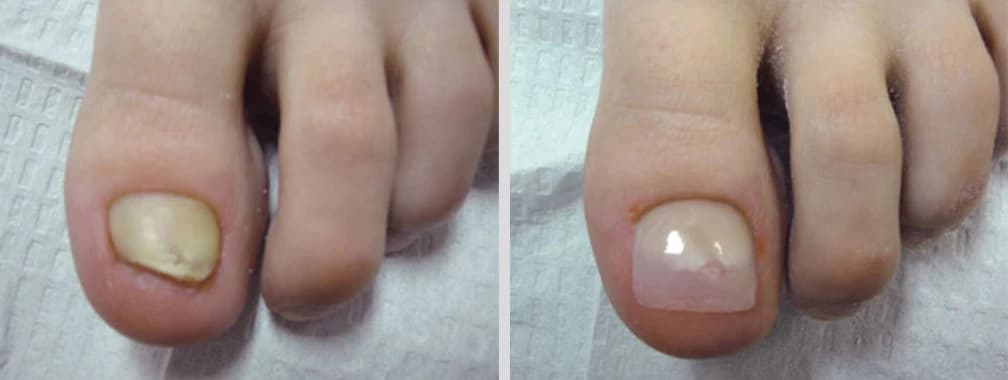
Introducing new nail technology at FALL
We offer two non-surgical nail options: Onyfix, a nail brace that can help ingrown or curved toenails, and Keryflex, a cosmetic nail restoration for damaged nails.
Diagnostic Ultrasound at FALL
We use a handheld ultrasound in the consulting room to look at tendons, the plantar fascia and other soft tissues while you're with us. It's painless and uses no radiation.
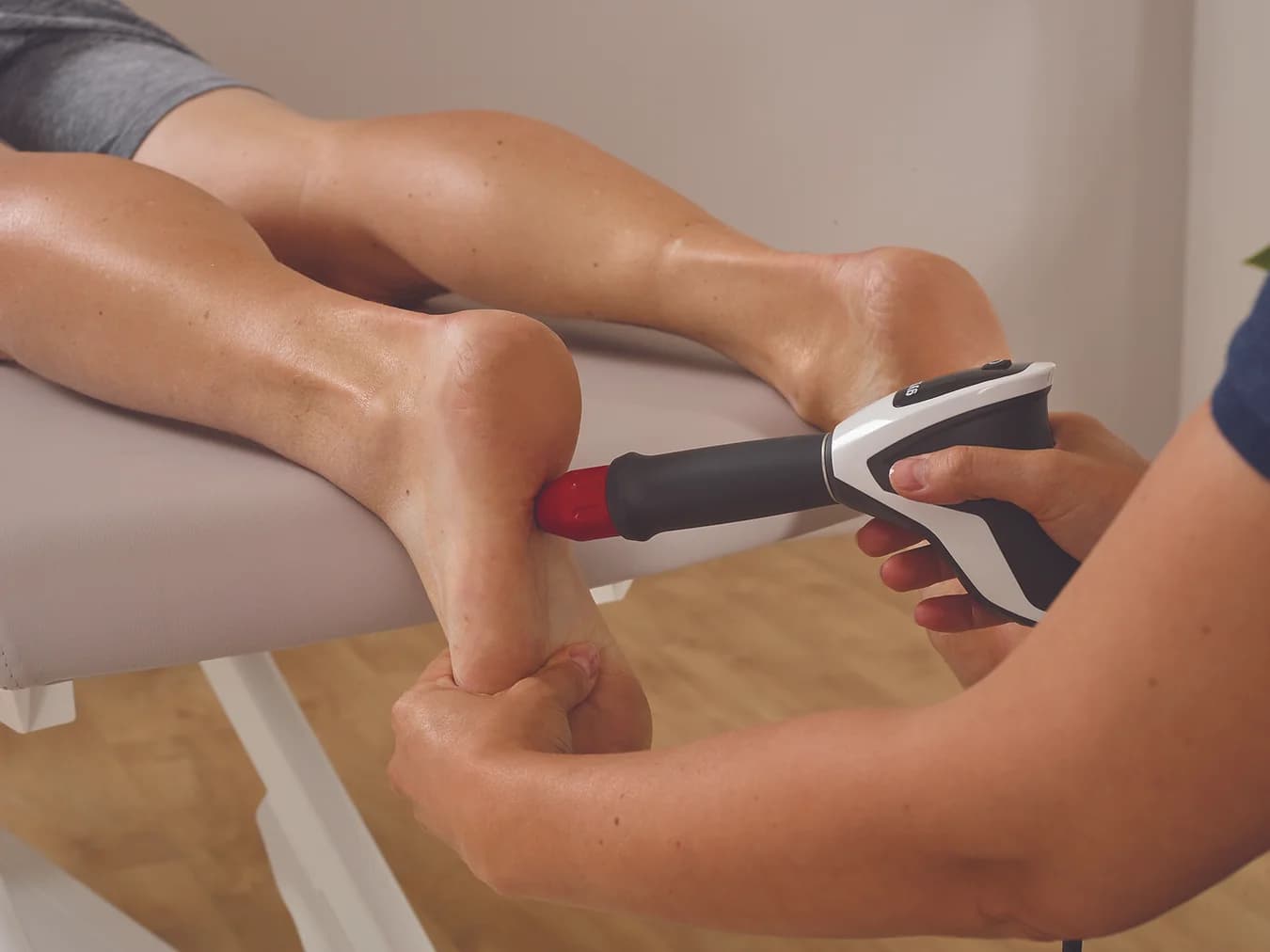
Shockwave therapy: a solution for chronic musculoskeletal conditions?
Shockwave therapy can help long-standing heel pain and Achilles tendon pain, especially alongside exercise. It isn't a cure-all, and the evidence for other conditions is weaker.