
Low-level laser therapy for Achilles tendon pain
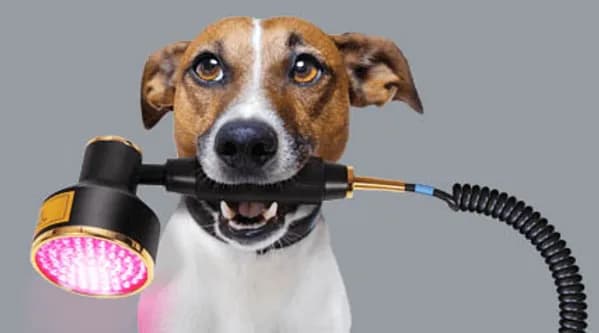
Exercise that gradually loads the tendon is the main treatment for Achilles pain. Low-level laser may ease pain a little when added to exercise, but results are mixed.
Low-level laser therapy, sometimes called "cold laser", uses gentle red or near-infrared light to try to ease pain and help tissue recover. At Foot Ankle Lower Limb we sometimes use it for Achilles tendon pain, but only as an extra alongside an exercise program. Here's what it is, how it might help, and what the research says about it for the Achilles.
What is Achilles tendon pain?
The Achilles tendon joins your calf muscles to your heel bone. Achilles tendinopathy is a long-term condition in which the tendon is overloaded faster than it can recover, so it becomes weaker and sore.¹ It used to be called "tendinitis", but it isn't mainly an inflammation.¹
Common signs are a tendon that's sore to touch, pain when walking or jumping, and stiffness that's worst first thing in the morning or after sitting still.¹ A sudden change in activity, not enough rest between sessions, tight or weak calf muscles and getting older can all play a part.¹
How does it work?
A low-level laser doesn't heat, cut or vibrate the skin,² so you usually feel very little during treatment. The light is absorbed inside the cells, and the leading theory is that this boosts their energy supply and helps calm pain and support repair.³ Scientists are still working out the details, so think of this as the best current explanation rather than settled fact.³
What can it help with?
For Achilles pain, laser is used to ease pain while you work on the treatment that matters most: exercises that gradually strengthen the calf and tendon. Exercise that loads the tendon, as heavily as you can comfortably manage, is the recommended first treatment for the most common type of Achilles pain.² Most Achilles problems get better without surgery, though it can take months.¹
Does it work?
The honest answer is that the results for the Achilles are mixed.
- Adding laser to an exercise program helped some people with Achilles pain recover faster.⁴
- Other people got no extra benefit from laser on top of exercise.⁵
- Across tendon and heel pain more broadly, laser at the right dose eases pain a little more than exercise alone, at least for a few months. We don't yet know whether the benefit lasts.⁶
Because the evidence is mixed, current guidelines don't recommend laser for the most common type of Achilles pain.² Our view is that it's reasonable to try for some people as an add-on, but it should never replace exercise, and we'll stop if it isn't helping.
Is it safe?
Low-level laser is very safe. No serious side effects have been reported in Achilles or other tendon studies.²,⁶ The light must never shine into the eyes. We don't use it over a known cancer, over the tummy during pregnancy, or for people with epilepsy.⁷
What to expect at FALL
Your podiatrist will first work out what's causing your pain and whether the tendon needs a scan. Your plan will centre on a progressive calf and tendon strengthening program, with advice on managing your activity and footwear. If we add laser, sessions are short, and a course usually runs over a few weeks. In studies, people had about 12 sessions over 4–8 weeks.⁴,⁵ We'll review your progress regularly and stop laser if it isn't making a difference.
If your Achilles is sore, book an appointment to get it assessed.
References
- Healthdirect Australia (2025). Achilles tendon injuries. https://www.healthdirect.gov.au/achilles-tendon
- Chimenti RL, Neville C, Houck J, et al. (2024). Achilles pain, stiffness, and muscle power deficits: midportion Achilles tendinopathy revision – 2024. Journal of Orthopaedic & Sports Physical Therapy, 54(12), CPG1–CPG32. https://doi.org/10.2519/jospt.2024.0302
- de Freitas LF, Hamblin MR (2016). Proposed mechanisms of photobiomodulation or low-level light therapy. IEEE Journal of Selected Topics in Quantum Electronics, 22(3), 7000417. https://doi.org/10.1109/JSTQE.2016.2561201
- Stergioulas A, Stergioula M, Aarskog R, et al. (2008). Effects of low-level laser therapy and eccentric exercises in the treatment of recreational athletes with chronic Achilles tendinopathy. American Journal of Sports Medicine, 36(5), 881–887. https://doi.org/10.1177/0363546507312165
- Tumilty S, McDonough S, Hurley DA, Baxter GD (2012). Clinical effectiveness of low-level laser therapy as an adjunct to eccentric exercise for the treatment of Achilles' tendinopathy: a randomized controlled trial. Archives of Physical Medicine and Rehabilitation, 93(5), 733–739. https://doi.org/10.1016/j.apmr.2011.08.049
- Naterstad IF, Joensen J, Bjordal JM, et al. (2022). Efficacy of low-level laser therapy in patients with lower extremity tendinopathy or plantar fasciitis: systematic review and meta-analysis of randomised controlled trials. BMJ Open, 12(9), e059479. https://doi.org/10.1136/bmjopen-2021-059479
- Navratil L, Kymplova J (2002). Contraindications in noninvasive laser therapy: truth and fiction. Journal of Clinical Laser Medicine & Surgery, 20(6), 341–343. https://doi.org/10.1089/104454702320901134
Reviewed by Andrew Schox, Podiatrist, BSc(Hons) PGradDipPod MPod. Last reviewed October 2026.
Need Professional Podiatry Care?
Our experienced team is here to help with all your foot and ankle concerns. Book an appointment today for expert diagnosis and treatment.
Book an AppointmentRelated Articles
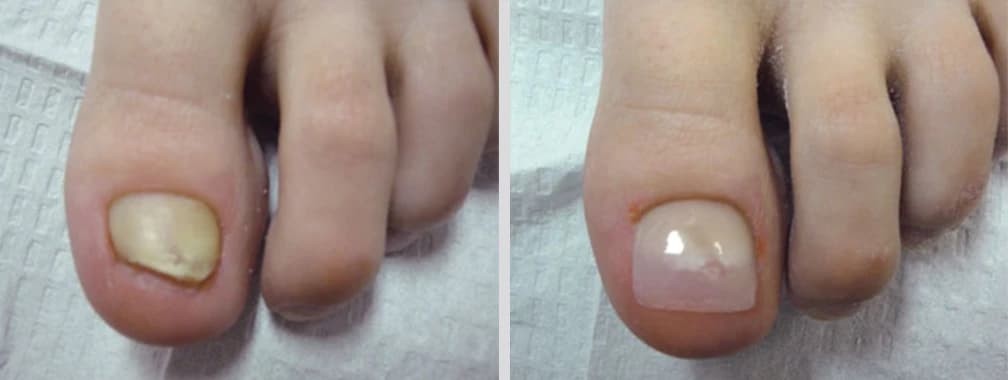
Introducing new nail technology at FALL
We offer two non-surgical nail options: Onyfix, a nail brace that can help ingrown or curved toenails, and Keryflex, a cosmetic nail restoration for damaged nails.
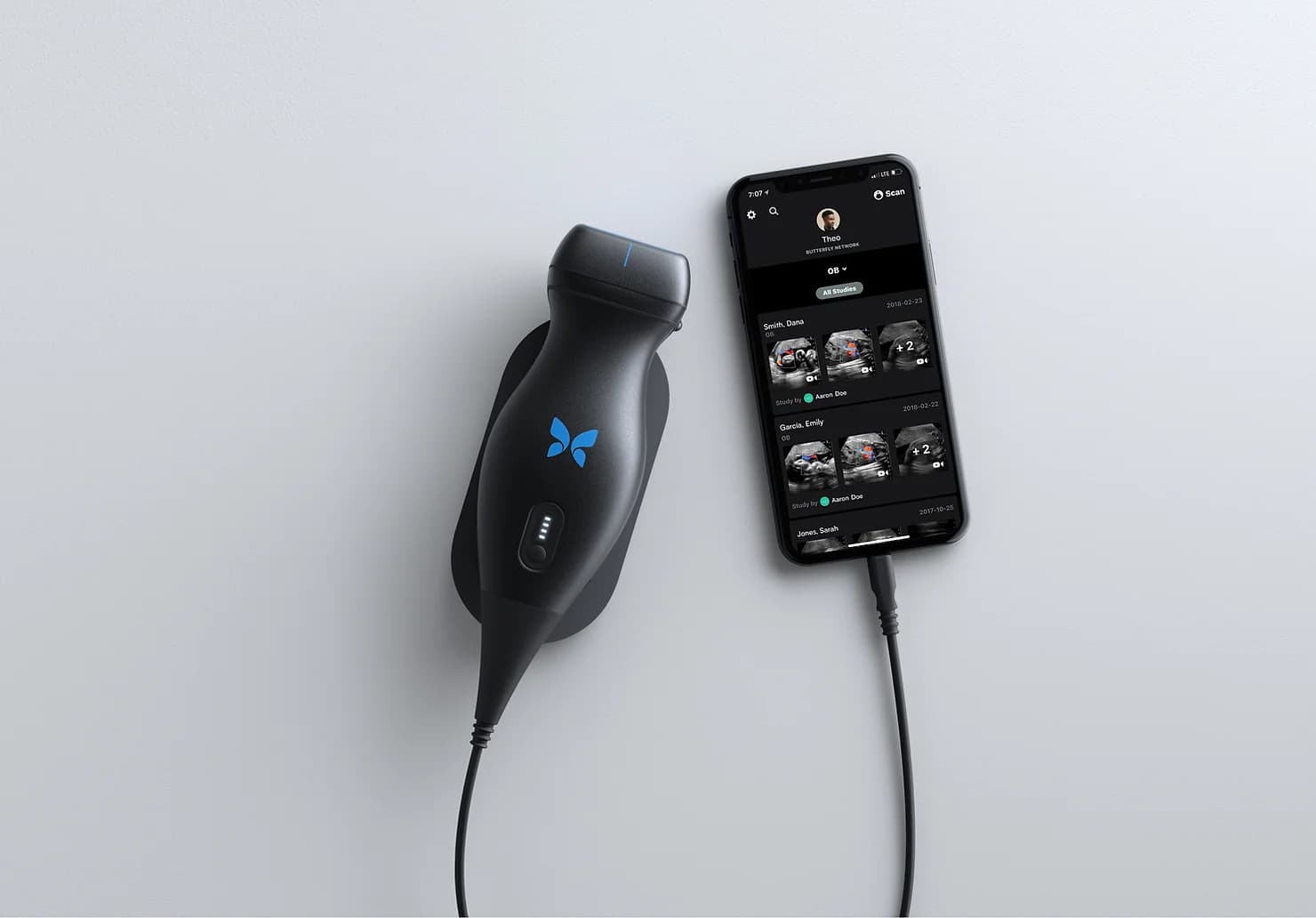
Diagnostic Ultrasound at FALL
We use a handheld ultrasound in the consulting room to look at tendons, the plantar fascia and other soft tissues while you're with us. It's painless and uses no radiation.
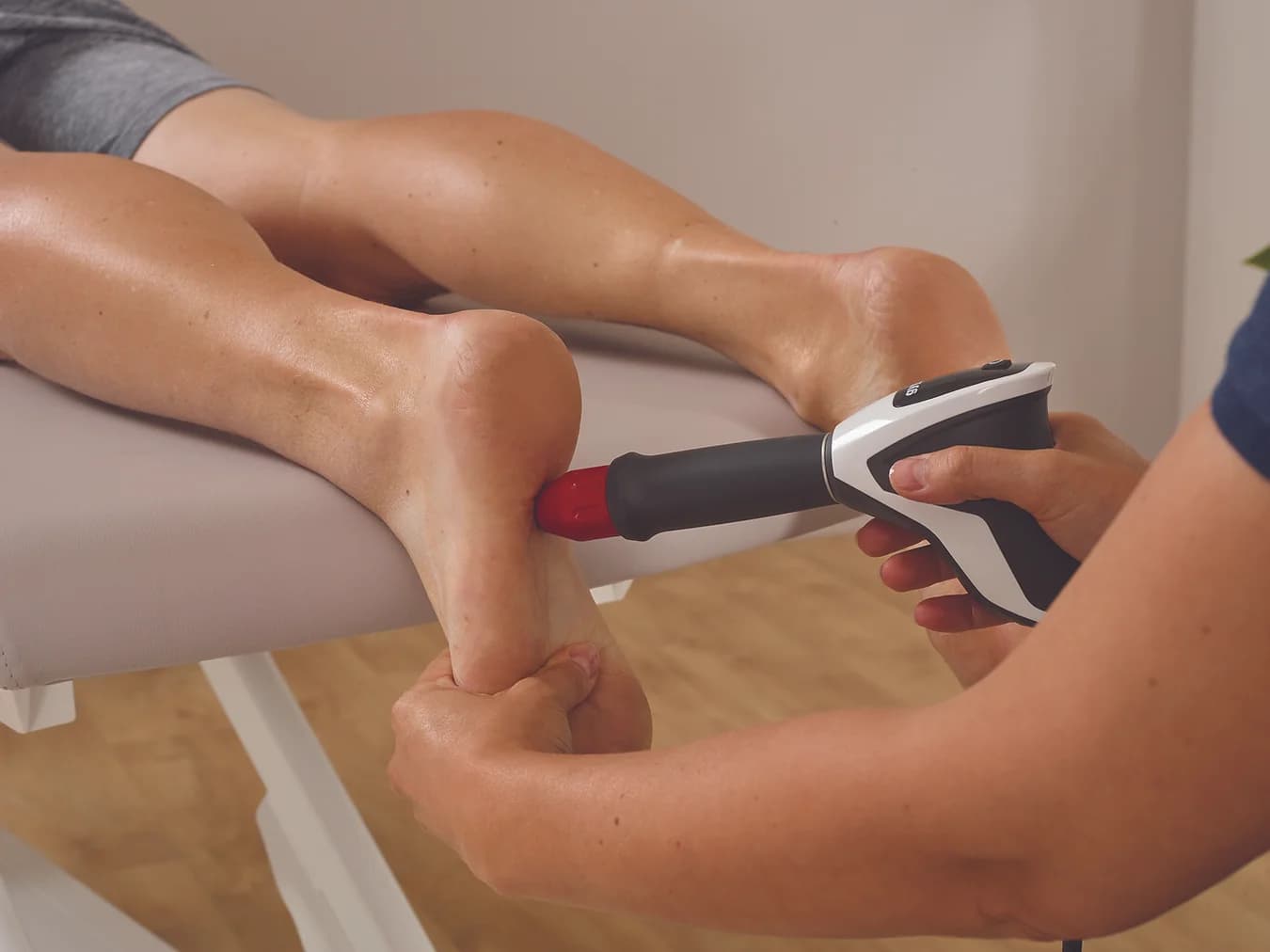
Shockwave therapy: a solution for chronic musculoskeletal conditions?
Shockwave therapy can help long-standing heel pain and Achilles tendon pain, especially alongside exercise. It isn't a cure-all, and the evidence for other conditions is weaker.