
Plantar fasciitis: a case history
Plantar fasciitis can take months to settle, but most people get better. This case shows how we assess heel pain and combine treatments, and what we'd do differently today.
Plantar fasciitis is one of the most common reasons people see a podiatrist. It causes pain under the heel that is often worst with the first steps in the morning.¹ It can last for weeks or months, but most people get better.¹ This case history shows how we assess and treat stubborn heel pain. Details have been changed to protect the patient's privacy, and everyone's recovery is different.
The patient's story
A woman in her 40s came to see us with pain under her left heel. It had been building for a while and had got much worse over the previous six months. The first steps out of bed each morning were the worst. Her heel also hurt after walking or standing for long periods.
Walking was her main form of exercise and she wanted to keep her weight in check, but by the time she came in, walking for exercise had become too painful.
What we found
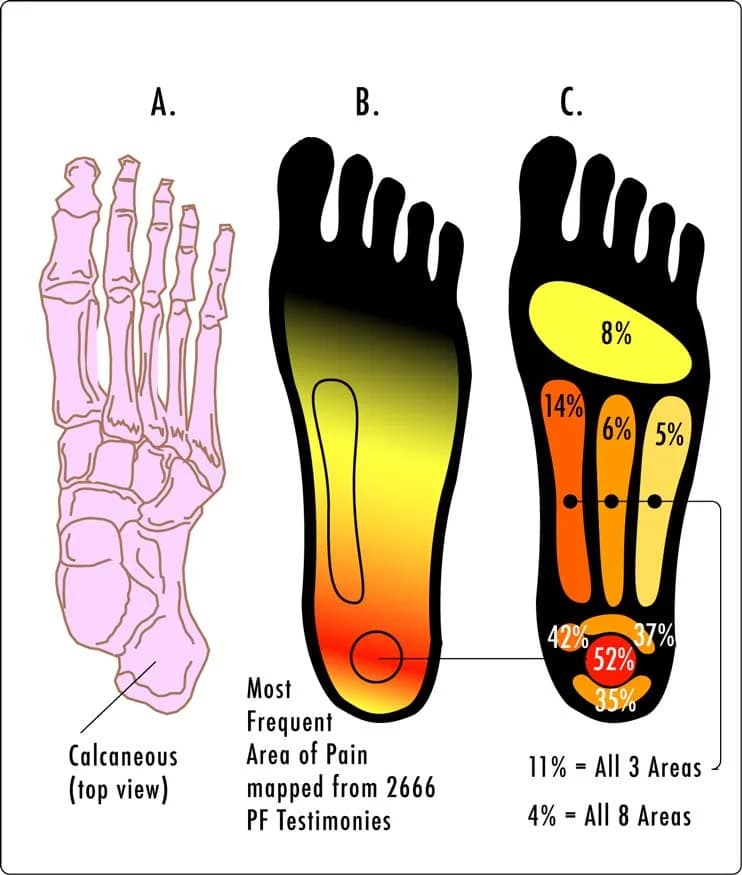
The pain was on the inside of the bottom of her heel, near the start of the arch. This is the classic spot for plantar fasciitis. The area was tender and a little swollen, and the plantar fascia (the thick band of tissue along the sole of the foot) felt tight.
We used diagnostic ultrasound in the clinic to look at the plantar fascia. It was thickened, which is typical of plantar fasciitis,² and there were signs of small tears within it.
How we treated it
Heel pain usually responds best to several treatments combined, rather than one on its own. Her plan included:
- education about what was causing her pain, how to manage her activity, and what to expect
- footwear advice: comfortable, supportive shoes with a slightly raised heel, and avoiding walking barefoot or in flat, unsupportive shoes until her pain settled³
- taping to support the arch and offload the heel
- daily stretches for the calf and the plantar fascia
- custom orthoses (shoe inserts) to support the arch and spread pressure away from the sore area
- an ultrasound-guided cortisone injection to ease her pain while the other treatments took effect.
She also had therapeutic ultrasound in the clinic, and used heat, ice and massage at home.
The outcome
Her pain eased gradually over the following months, and she was able to return to walking for exercise. When we caught up with her three years later, she was still pain-free and active.
What does the evidence say works?
This case was treated some years ago. If we saw her today, we'd use much the same core plan, with a few changes based on newer evidence.
- Taping, stretching and education are the core treatments. Taping and stretching ease first-step pain in the short term.³
- Footwear advice helps people manage their pain day to day.³
- Shockwave therapy is the next step if heel pain isn't improving after about four weeks.³
- Orthoses can help with pain if things are still slow to improve.³,⁴ Ready-made orthoses seem to work about as well as custom ones for heel pain.⁴
- Cortisone injections may ease heel pain a little for about a month, but don't seem to help after that.⁵ We use them sparingly, as one part of a plan.
Therapeutic ultrasound isn't among the treatments recommended in current best-practice guidance for heel pain,³ so it's no longer part of our usual plan.
When to see a podiatrist
See a podiatrist or GP if your heel pain hasn't improved after a few weeks of self-care, is stopping you from walking or exercising, or keeps coming back. Don't let it go on for more than 8 weeks without getting it checked.¹ See a doctor promptly if your heel is hot, red and swollen, if you have numbness or tingling, or if the pain started after a fall or injury. If you have diabetes, get any foot pain checked early.
Most people with plantar fasciitis do get better, but recovery can take several weeks or months.³ If heel pain is stopping you from doing what you enjoy, book an appointment with our podiatrists in Booragoon.
References
- healthdirect Australia (2025). Plantar fasciitis. https://www.healthdirect.gov.au/plantar-fasciitis
- McMillan AM, Landorf KB, Barrett JT, Menz HB, Bird AR (2009). Diagnostic imaging for chronic plantar heel pain: a systematic review and meta-analysis. Journal of Foot and Ankle Research, 2, 32. https://doi.org/10.1186/1757-1146-2-32
- Morrissey D, Cotchett M, Said J'Bari A, et al. (2021). Management of plantar heel pain: a best practice guide informed by a systematic review, expert clinical reasoning and patient values. British Journal of Sports Medicine, 55(19), 1106–1118. https://doi.org/10.1136/bjsports-2019-101970
- Whittaker GA, Munteanu SE, Menz HB, Tan JM, Rabusin CL, Landorf KB (2018). Foot orthoses for plantar heel pain: a systematic review and meta-analysis. British Journal of Sports Medicine, 52(5), 322–328. https://doi.org/10.1136/bjsports-2016-097355
- David JA, Sankarapandian V, Christopher PRH, Chatterjee A, Macaden AS (2017). Injected corticosteroids for treating plantar heel pain in adults. Cochrane Database of Systematic Reviews, 2017(6), CD009348. https://doi.org/10.1002/14651858.CD009348.pub2
Reviewed by Andrew Schox, Podiatrist, BSc(Hons) PGradDipPod MPod. Last reviewed October 2026.
Need Professional Podiatry Care?
Our experienced team is here to help with all your foot and ankle concerns. Book an appointment today for expert diagnosis and treatment.
Book an AppointmentRelated Articles

When the wrong running shoe is a problem
A new running shoe can sometimes cause pain rather than prevent it. This case shows why your shoe should suit your feet, and why it's worth checking footwear when pain starts.

Trauma case: toe problems after a serious leg injury
A serious leg or foot injury can damage the tendons that control the toes, leaving them clawed or bent. When padding and footwear don't help, surgery can straighten them.
Morton's neuroma: symptoms, treatment and when surgery helps
Morton's neuroma is an irritated nerve in the ball of the foot. Wider shoes, pads and injections often help, and surgery is an option when they don't.