
What are the best shoes for orthotics?
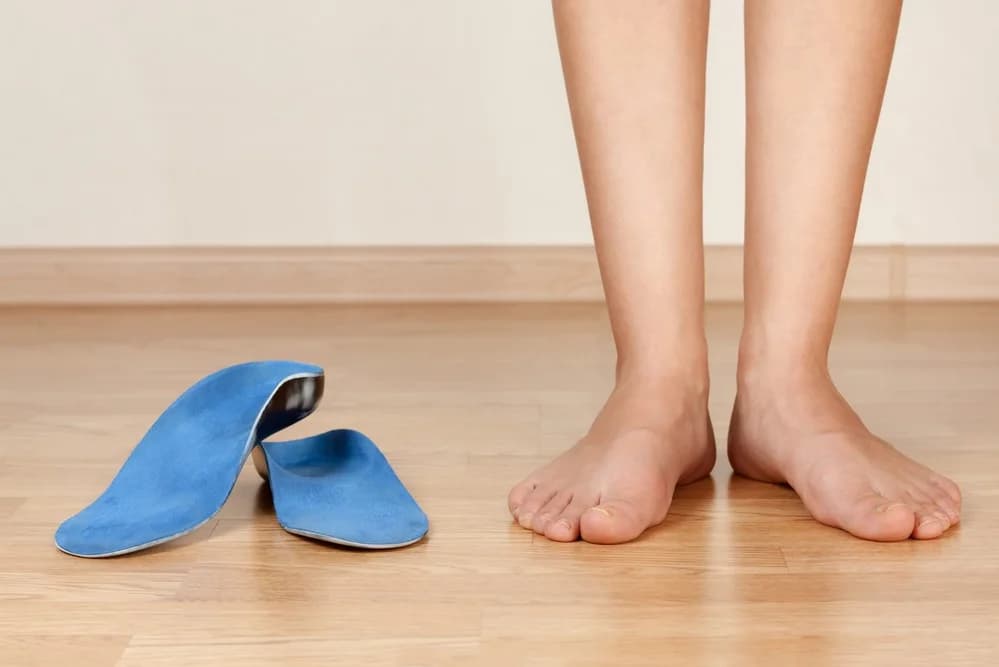
The best shoes for orthotics have a removable insole, a firm heel, enough depth and a low heel, and fasten with laces or Velcro. Always take your orthotics when you shop.
Orthotics (foot orthoses) only work well if they sit properly in your shoes. The wrong shoe can push your foot up and out of the heel, squash your toes, or let the orthotic slide around. There isn't one "best" brand, but there are some features to look for. Here's what to check when you buy shoes to wear with orthotics.
What should I look for in a shoe?
A removable insole. Most orthotics are designed to replace the shoe's own liner, so look for one you can take out.¹,² If the insole isn't removable, the shoe needs plenty of extra depth to fit the orthotic on top.²
A firm heel counter. The heel counter is the stiff cup at the back of the shoe that wraps around your heel. It should be firm and support your heel. You shouldn't be able to fold the back of the shoe down easily.¹ A firm heel counter helps hold your foot and orthotic in place.
Enough depth. Orthotics take up room inside the shoe. A deep shoe with a rounded or square toe stops your heel from lifting out and your toes from being squashed.¹,²
Laces or Velcro. A fastening over the top of the foot holds your foot firmly against the orthotic without rubbing.¹,² Slip-on shoes tend to let the foot slide around.
A low heel. Keep the heel low, ideally under about 3–4 cm.¹,² A higher heel tips your foot forward and changes how the orthotic sits.
Which types of shoes work best?
Most people find it easiest to wear orthotics in:
- sports shoes and runners
- walking shoes
- lace-up casual shoes
- work boots with a removable liner.
These tend to have removable liners, enough depth and a secure fastening. Some brands make "orthotic-friendly" shoes with deeper, removable liners. They can be a good choice, but always check the features above rather than relying on the label.
How do I shop for shoes with orthotics?
- Take your orthotics with you. Take out the shoe's liner, put your orthotic in, and try the shoe on with it in place.
- Wear the socks you'd normally wear with those shoes.
- Check the fit. Your heel shouldn't slip out as you walk, and your toes shouldn't press against the top or end of the shoe.
- Shop later in the day if your feet tend to swell, because they'll be at their largest then.¹,²
- Walk around the shop. The shoe should feel comfortable straight away, not after it "wears in".
What about dress shoes and heels?
Dress shoes, ballet flats and heels are often too shallow or narrow for a standard orthotic. If you need to wear them for work or special occasions, a slimmer, narrower orthotic designed for dress shoes may fit. These are less supportive than a full-size device, but they can be a useful second pair. Ask your podiatrist whether one would suit your feet and your shoes.
When to see a podiatrist
See your podiatrist if your orthotics:
- feel uncomfortable or cause rubbing, blisters or new pain
- don't fit in the shoes you need to wear
- are more than a few years old, worn or cracked
- were made before a change in your feet, weight or activity.
If you have diabetes, poor circulation or reduced feeling in your feet, any rubbing or blister needs checking promptly.
At Foot Ankle Lower Limb, we're happy to check your shoes and orthotics together. Bring both to your appointment, or book a review.
References
- NHS Borders (2025). Guide to buying footwear: information for patients. https://www.rightdecisions.scot.nhs.uk/patient-information-leaflets/primary-community-services/podiatry-orthotics/guide-to-buying-footwear-information-for-patients/
- Guy's and St Thomas' NHS Foundation Trust (2025). Choosing shoes to reduce foot pain. https://guysandstthomas.nhs.uk/health-information/choosing-shoes-reduce-foot-pain
Reviewed by Andrew Schox, Podiatrist, BSc(Hons) PGradDipPod MPod. Last reviewed October 2026.
Need Professional Podiatry Care?
Our experienced team is here to help with all your foot and ankle concerns. Book an appointment today for expert diagnosis and treatment.
Book an AppointmentRelated Articles
Bunions: is it just a "bump" on the side of my big toe?
A bunion isn't just a bump. It's a change in the alignment of the big toe joint that often runs in families. Shoes can make it hurt, and treatment eases pain but won't straighten the toe.
Does your child have heel pain?
Heel pain in active children aged about 8 to 14 is often Sever's disease, a growth plate problem. It's common, it settles with time, and heel raises and activity changes can ease it.

Is foot surgery painful?
You won't feel the operation itself, and pain afterwards can usually be well controlled. Bigger operations on the bones can still be quite sore, so a good pain plan matters.