
What if your nail problem comes from an underlying bone problem?
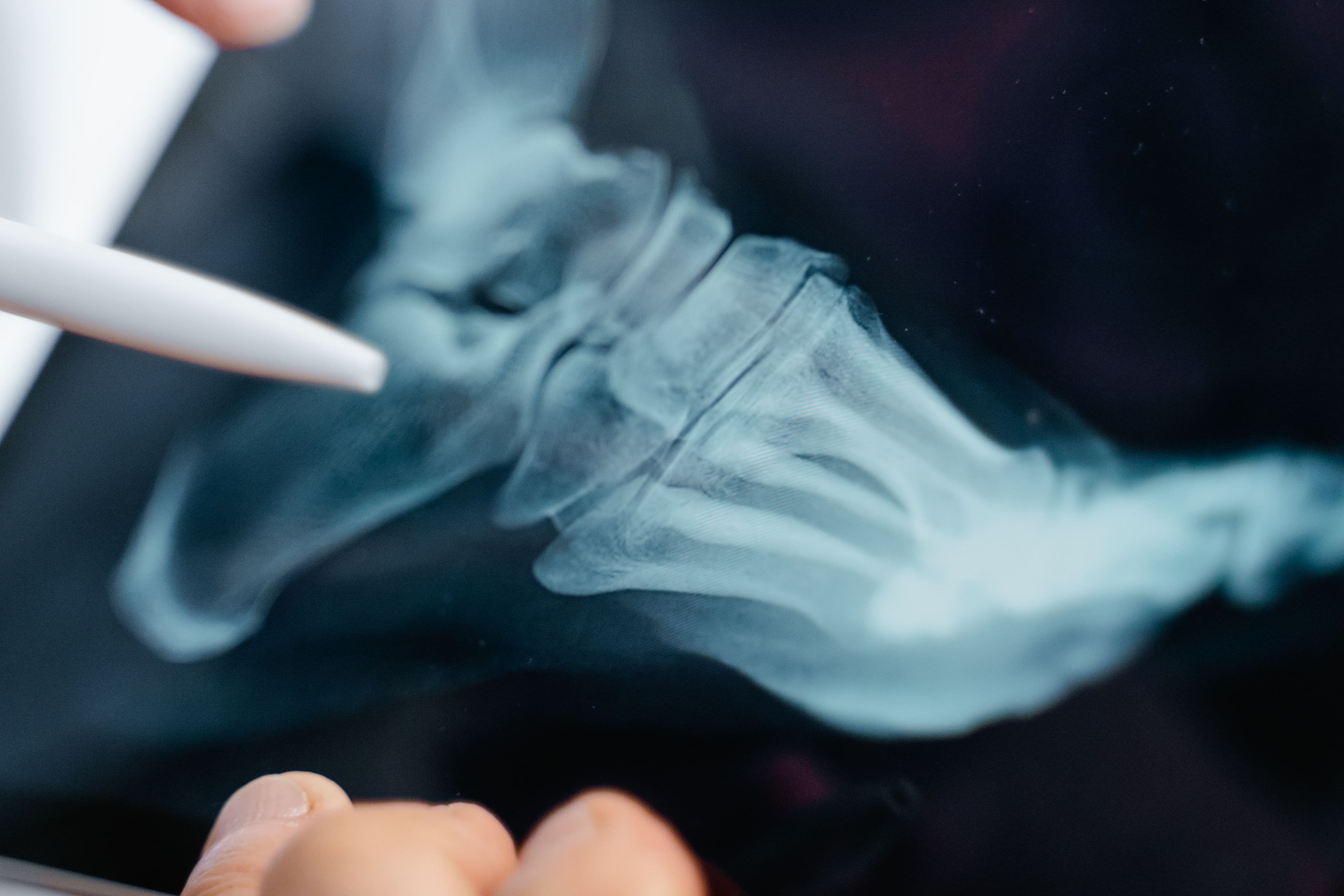
A small bony growth under the toenail, called a subungual exostosis, can lift and deform the nail and cause pain. An X-ray confirms it, and minor surgery removes it.
Most toenail problems start in the nail or the skin around it. But sometimes the cause is the bone underneath. A small bony growth at the tip of the toe, called a subungual exostosis, can push the nail up and out of shape. Because it can look like other nail problems, it's sometimes missed. The key thing to know is that an X-ray can confirm it, and it can be treated.
What is a subungual exostosis?
"Subungual" means under the nail, and an "exostosis" is an outgrowth of bone. A subungual exostosis is a small, harmless (benign) growth of bone and cartilage from the tip of a toe or, less often, a finger.¹ It's a fairly common cause of pain and nail deformity in the toes.²
It can happen at any age, but about half of cases appear by age 20, and it's more common in women.¹ The big toe is affected most often.¹ In adults, a small bony spur under the nail is often found together with a thickened or misshapen nail bed.³
What causes it?
The cause isn't known. Repeated pressure or irritation of the bone may play a part, and a past injury or long-standing infection may contribute.¹ About 3 in 10 people with a subungual exostosis remember injuring the toe beforehand.²
Signs and symptoms
A firm lump grows under the nail. As it grows upwards, it lifts the nail away from the nail bed, which often causes pain.¹ You might notice:
- the nail lifting or separating from the skin underneath
- a nail that is thickened, curved or changing shape
- a change in colour of the nail
- pain when you press on the nail or wear closed shoes
- nail problems that keep coming back despite treatment.
Why is it tricky to diagnose?
Several other conditions can look similar, including a wart under the nail, a fast-growing red lump called a pyogenic granuloma, other bony growths, and rarely a skin cancer (melanoma) or a small tumour of the blood vessels.¹ A thick, lifted nail can also be put down to a fungal infection or past injury. Diagnosis is delayed in about 1 in 10 cases.²
An X-ray is needed to confirm that the lump is made of bone.¹ It also shows how big the growth is, which helps plan treatment.
What can help?
Self-care. Wear shoes with a deep, roomy toe box so they don't press on the nail. Keep the nail trimmed short and straight across. These steps ease pressure but won't remove the growth.
What a podiatrist can do. We can examine the nail, refer you for an X-ray and make the nail more comfortable by thinning or trimming it. If needed, we'll refer you for surgery.
Surgery. Removing the growth is the treatment of choice. It's usually done under local anaesthetic, and the bone underneath is scraped clean to help stop it coming back.¹ When the growth is removed completely, it comes back in about 4% of cases.² Some people are left with a slightly misshapen nail afterwards, so careful handling of the nail bed during surgery matters.²
When to see a podiatrist
See a podiatrist if a toenail keeps lifting, thickening or hurting, especially if treatment for a fungal infection or ingrown nail hasn't helped. Get it checked promptly if there's a dark streak or patch under the nail, a lump that is growing or bleeding, or a sore that won't heal, as these need to be checked for more serious causes. If you have diabetes or poor circulation, have any nail problem looked at early.
If you have a stubborn nail problem, book an appointment with our podiatrists in Booragoon.
References
- DermNet (n.d.). Subungual exostosis. https://dermnetnz.org/topics/subungual-exostosis
- DaCambra MP, Gupta SK, Ferri-de-Barros F (2014). Subungual exostosis of the toes: a systematic review. Clinical Orthopaedics and Related Research, 472(4), 1251–1259. https://doi.org/10.1007/s11999-013-3345-4
- Pérez-Palma L, Manzanares-Céspedes MC, de Veciana EG (2018). Subungual exostosis: systematic review and meta-analysis. Journal of the American Podiatric Medical Association, 108(4), 320–333. https://doi.org/10.7547/17-102
Reviewed by Andrew Schox, Podiatrist, BSc(Hons) PGradDipPod MPod. Last reviewed October 2026.
Need Professional Podiatry Care?
Our experienced team is here to help with all your foot and ankle concerns. Book an appointment today for expert diagnosis and treatment.
Book an AppointmentRelated Articles

Cortisone injections: relief for foot and ankle pain
A cortisone injection can calm a painful joint, bursa or nerve within days, and the relief often lasts weeks to months. It works best as one part of a wider treatment plan.

Why are my toenails unsightly?
Thick, discoloured or misshapen toenails are common. Fungal infection, injury, ageing, skin conditions and ingrown nails are the usual causes, and most can be treated or managed.

Why do I get calf muscle cramps?
Calf cramps are common and usually harmless, often linked to tired muscles, exercise or age. Cramping pain that comes on with walking and eases with rest is different and needs checking.