
Common causes of knee pain in children and how to treat them
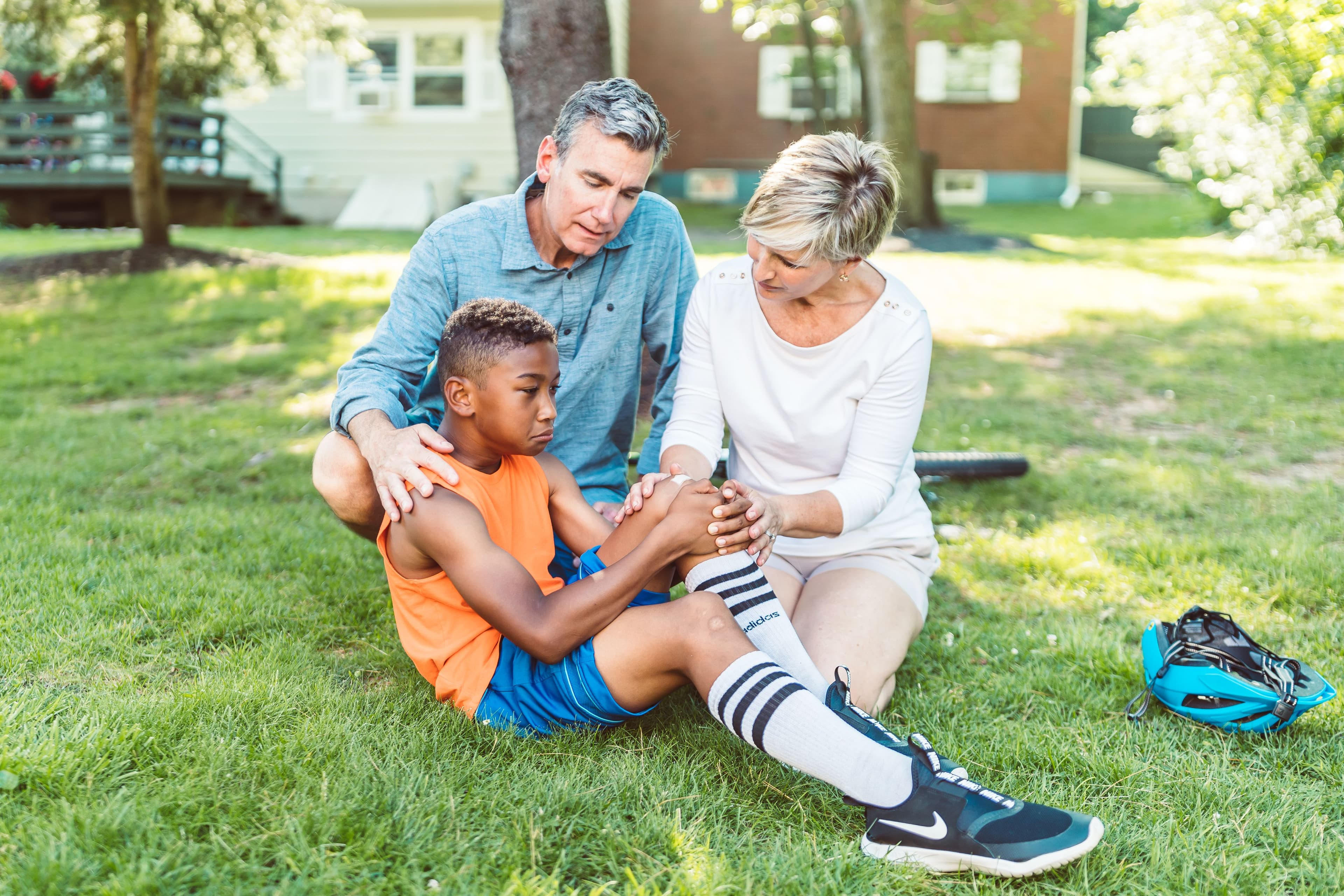
Knee pain is common in active, growing children and usually settles with the right exercises and a change in sport load. Pain that keeps coming back should be checked.
Knee pain is common in growing children, especially those who love sport. Most of the time it's caused by a growth-related or overuse problem that settles with the right care. But knee pain after normal activity isn't something your child should just put up with, so it's worth getting it checked. Here are three of the most common causes and how they're treated.
Pain around the kneecap (patellofemoral pain)
Patellofemoral pain is a dull ache at the front of the knee, around or behind the kneecap. It's common in children going through puberty and playing sport, and more common in girls.¹
The pain tends to get worse with sport, sitting for a long time, and climbing stairs.¹ Growth puts extra stress on bones and tendons, and in some children the kneecap doesn't sit or track quite right in its groove.¹ The good news is that kneecap pain with no other problem should get better when your child stops growing or rests from sport for a while.¹
A painful bump below the knee (Osgood-Schlatter disease)
Osgood-Schlatter disease causes pain and swelling over the growth plate at the top of the shin bone, just below the kneecap.² The big thigh muscles pull on this growth plate through the kneecap tendon. In a growing child, that repeated pull can make it sore.
It's most common in children aged 10–14 who are going through a growth spurt, especially if they play sports with lots of running, jumping and quick changes of direction, such as soccer, basketball or ballet.² Some children develop a small, hard lump under the knee that may stay after they stop growing.²
Osgood-Schlatter disease stops once the growth plate finishes growing.² In the meantime, the pain usually settles with rest and treatment.²
Pain at the bottom of the kneecap
Pain just below the kneecap, at the top of the tendon, has a similar cause in young people. In children it's often Sinding-Larsen-Johansson syndrome, where the growth area at the bottom of the kneecap becomes sore and swollen during and after exercise.³ It's most common during the growth spurt, at about 12–15 years in boys and 8–12 years in girls.³ It usually builds up slowly and is worse with running, jumping and kneeling.³
In older teenagers and adults, pain in the same place is more often patellar tendinopathy ("jumper's knee"), which often follows a sudden jump in training. Both usually settle with time and the right care, but playing through the pain can make them worse and slower to treat.³
How are they treated?
Treatment depends on the cause, but it usually includes:
- Exercises. A strengthening and stretching program is the main treatment for kneecap pain. Combining hip and knee exercises works best.⁴
- Adjusting sport and training. A short break from running and jumping, then a gradual return, helps growth-related pain settle.²,³ Watch out for sudden increases in training.
- Ice for 10–20 minutes after activity can ease pain.²,³
- Orthoses (shoe inserts) can reduce kneecap pain in the short term, particularly if the way your child's feet move is contributing.⁴
- Footwear advice for school, casual and sport shoes.
Our podiatrists can assess how your child walks, runs and balances to see what's adding load to the knee. We may also tape the knee or suggest a knee support for a while.¹
Treatments such as laser and other machine-based therapies haven't been shown to help kneecap pain,⁴ so we focus on exercise and load management.
When to see a podiatrist or doctor
See a health professional early if your child has knee pain, even if it's mild.¹,² Pain felt in the knee sometimes comes from the hip,¹,⁵ so a proper assessment matters.
See a doctor urgently if your child:
- has a fever, chills or seems unwell⁵
- suddenly can't walk or put weight on the leg⁵
- has severe pain in one joint, or pain that wakes them at night.⁵
If your child is complaining of knee pain, or having trouble with their knees during sport, book an appointment with our podiatrists in Booragoon.
References
- Sydney Children's Hospitals Network (2026). Anterior knee pain factsheet. https://www.schn.health.nsw.gov.au/factsheets/anterior-knee-pain
- Sydney Children's Hospitals Network (2026). Osgood-Schlatter disease factsheet. https://www.schn.health.nsw.gov.au/factsheets/osgood-schlatter-disease
- University Hospital Southampton NHS Foundation Trust (n.d.). Physiotherapy for Sinding Larsen Johansson syndrome. https://www.uhs.nhs.uk/Media/UHS-website-2019/Patientinformation/Childhealth/Physiotherapy-for-Sinding-Larsen-Johansson-syndrome-2726-PIL.pdf
- Crossley KM, van Middelkoop M, Callaghan MJ, et al. (2016). 2016 Patellofemoral pain consensus statement from the 4th International Patellofemoral Pain Research Retreat, Manchester. Part 2: recommended physical interventions. British Journal of Sports Medicine, 50(14), 844–852. https://doi.org/10.1136/bjsports-2016-096268
- The Royal Children's Hospital Melbourne (2025). Clinical practice guidelines: The limping or non-weight bearing child. https://www.rch.org.au/clinicalguide/guideline_index/The_limping_or_non-weight_bearing_child/
Reviewed by Andrew Schox, Podiatrist, BSc(Hons) PGradDipPod MPod. Last reviewed October 2026.
Need Professional Podiatry Care?
Our experienced team is here to help with all your foot and ankle concerns. Book an appointment today for expert diagnosis and treatment.
Book an AppointmentRelated Articles
Cortisone injections: relief for foot and ankle pain
A cortisone injection can calm a painful joint, bursa or nerve within days, and the relief often lasts weeks to months. It works best as one part of a wider treatment plan.
Why are my toenails unsightly?
Thick, discoloured or misshapen toenails are common. Fungal infection, injury, ageing, skin conditions and ingrown nails are the usual causes, and most can be treated or managed.
Why do I get calf muscle cramps?
Calf cramps are common and usually harmless, often linked to tired muscles, exercise or age. Cramping pain that comes on with walking and eases with rest is different and needs checking.