
Common foot injuries of dancers
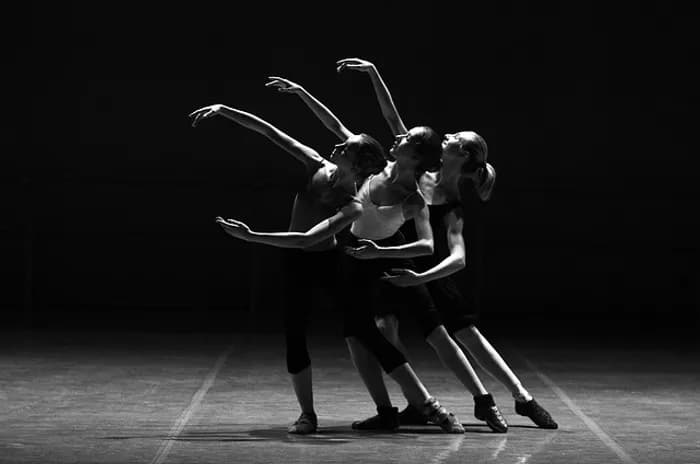
Most dance injuries come from overuse, and the feet and ankles take a big share. Tendon pain, pain at the back of the ankle and stress fractures are common, and most settle without surgery.
Dancers are athletes as well as artists. Dance asks a lot of the feet and ankles, and injuries are common at every level, from students to professionals.¹,² Most dance injuries are overuse injuries rather than sudden accidents. They build up when the body is asked to do more, more often, than its tissues can cope with.²
Which parts get injured?
Most dance injuries are in the legs, and the foot and ankle account for a large share of them.² The foot, ankle and lower leg can be affected by a range of problems, including tendon injuries, sprains, strains and stress fractures. Three of the most common are described below.
Tendon pain (tendinopathy)
Tendinopathy is an overuse injury in which a tendon becomes painful and stiff, and sometimes swollen. In dancers, two tendons are often affected:
- the Achilles tendon at the back of the heel
- the flexor hallucis longus (FHL) tendon, which bends the big toe and runs behind the inside of the ankle. FHL pain is so common in ballet that it's sometimes called "dancer's tendinitis".³
Things outside the body can play a part, such as hard or unforgiving floors, a sudden change in rehearsal or class schedule, and technique. So can things within the body, such as calf strength and age.
What helps: exercise that gradually loads the tendon is the treatment that works best for Achilles tendon pain.⁴ Complete rest isn't usually needed; you may need to change or reduce some activities for a while. Your podiatrist may also use taping, footwear or orthoses (shoe inserts) where they suit your dancing. Low-level laser therapy is sometimes offered, but current guidelines don't recommend it for the most common type of Achilles pain.⁴
Pain at the back of the ankle (posterior ankle impingement)
Posterior ankle impingement is pain at the back of the ankle caused by tissues being squeezed when the foot is pointed as far as it will go. It's common in ballet dancers, because dancing en pointe or on demi-pointe (relevé) needs extreme pointing of the ankle.³
The pinched tissue can be soft tissue, such as an irritated FHL tendon or a thickened joint lining. In other cases it's bone. Some people have a small extra bone at the back of the ankle (an os trigonum), and some have a larger bony bump there. These can block the ankle from pointing fully.⁵
What helps: non-surgical care comes first. This usually means a period of rest or modified dancing, physiotherapy, and sometimes anti-inflammatory medicine or an injection.⁵ Your podiatrist will also look at ankle mobility, muscle strength and technique, because these can add to the problem. If symptoms haven't settled after about three months of good non-surgical care, a surgical opinion may be worth considering.⁵ Surgery for this problem in dancers usually has good results.³
Stress fractures
A stress fracture is a small crack in a bone. In the foot it often affects the long bones (metatarsals). Stress fractures build up over time with repeated high-impact activity such as running, jumping and dancing.⁶ They're often linked to a sudden increase in training, or a change in conditions such as footwear or floors.
Most stress fractures heal with rest and a change in activity, but some don't heal well and need more treatment.⁶ That's one reason not to dance through bone pain that is getting worse.
How your podiatrist can help
Podiatrists diagnose, treat and help prevent foot and ankle injuries in dancers. We can refer you for imaging, such as x-ray or ultrasound, when it's needed. Treatment may include joint mobilisation, soft-tissue work, dry needling, strapping and taping, and a strengthening and rehabilitation program built around your dancing. A planned approach to preventing and managing injuries may help reduce future injuries.¹
At Foot Ankle Lower Limb we offer low-level laser therapy as an extra treatment alongside exercise. It's painless and drug-free, and it can ease some types of pain in the short term. It isn't a cure, and it doesn't replace rehabilitation. It may suit dancers who can't use other options, such as orthoses in dance shoes.
When to see a podiatrist
See a podiatrist if pain is stopping you from dancing, keeps coming back, or is getting worse. Get checked promptly if you have bone pain that is worse with activity and doesn't settle with rest, or if you have swelling or pain after a fall or a landing. The earlier an injury is assessed, the sooner you can get back to full training.
If you're a dancer with foot or ankle pain, book an appointment with our podiatrists.
References
- Hincapié CA, Morton EJ, Cassidy JD. (2008). Musculoskeletal injuries and pain in dancers: a systematic review. Archives of Physical Medicine and Rehabilitation, 89(9), 1819–1829. https://doi.org/10.1016/j.apmr.2008.02.020
- Smith PJ, Gerrie BJ, Varner KE, et al. (2015). Incidence and prevalence of musculoskeletal injury in ballet: a systematic review. Orthopaedic Journal of Sports Medicine, 3(7), 2325967115592621. https://doi.org/10.1177/2325967115592621
- Rietveld ABMB, Hagemans FMT, Haitjema S, et al. (2018). Results of treatment of posterior ankle impingement syndrome and flexor hallucis longus tendinopathy in dancers: a systematic review. Journal of Dance Medicine & Science, 22(1), 19–32. https://doi.org/10.12678/1089-313X.22.1.19
- Chimenti RL, Neville C, Houck J, et al. (2024). Achilles pain, stiffness, and muscle power deficits: midportion Achilles tendinopathy revision – 2024. Journal of Orthopaedic & Sports Physical Therapy, 54(12), CPG1–CPG32. https://doi.org/10.2519/jospt.2024.0302
- Yasui Y, Hannon CP, Hurley E, Kennedy JG. (2016). Posterior ankle impingement syndrome: a systematic four-stage approach. World Journal of Orthopedics, 7(10), 657–663. https://doi.org/10.5312/wjo.v7.i10.657
- Healthdirect Australia (2025). Foot and toe fractures. https://www.healthdirect.gov.au/foot-and-toe-fractures
Reviewed by Andrew Schox, Podiatrist, BSc(Hons) PGradDipPod MPod. Last reviewed October 2026.
Need Professional Podiatry Care?
Our experienced team is here to help with all your foot and ankle concerns. Book an appointment today for expert diagnosis and treatment.
Book an AppointmentRelated Articles

Cortisone injections: relief for foot and ankle pain
A cortisone injection can calm a painful joint, bursa or nerve within days, and the relief often lasts weeks to months. It works best as one part of a wider treatment plan.
Why are my toenails unsightly?
Thick, discoloured or misshapen toenails are common. Fungal infection, injury, ageing, skin conditions and ingrown nails are the usual causes, and most can be treated or managed.
Why do I get calf muscle cramps?
Calf cramps are common and usually harmless, often linked to tired muscles, exercise or age. Cramping pain that comes on with walking and eases with rest is different and needs checking.