
Foot posture and back pain
Your feet may play a small part in back pain for some people, but the link is weaker than often claimed. Staying active helps most, and orthoses aren't a proven back pain treatment.
Back pain is very common. Around 4 million Australians, about 16% of the population, live with back problems.¹ You may have heard that the way your feet sit or move can cause back pain. For some people there may be a link, but it's weaker than is often claimed. Here's what we know, and what's worth trying.
Who gets back pain?
More than 9 out of 10 cases of back pain aren't caused by a serious medical problem.² Things that can make common back pain worse include soft tissue injuries, stress, smoking, lack of exercise, being overweight, a sudden increase in load on the spine, and mental health conditions such as anxiety or depression.² Back problems also become more common as you get older.¹
Is foot posture linked to back pain?
Your foot posture is the position your foot takes when you stand on it. Foot function is how your foot moves when you walk. Because your feet are the base you stand on, it makes sense that they could affect the joints and muscles above them.
The evidence suggests a small link at most. How your feet sit when you stand doesn't seem to be linked to low back pain. Feet that roll in (pronate) more while walking have been linked to low back pain in women, but this doesn't prove that the feet cause it.³
Overpronation and oversupination
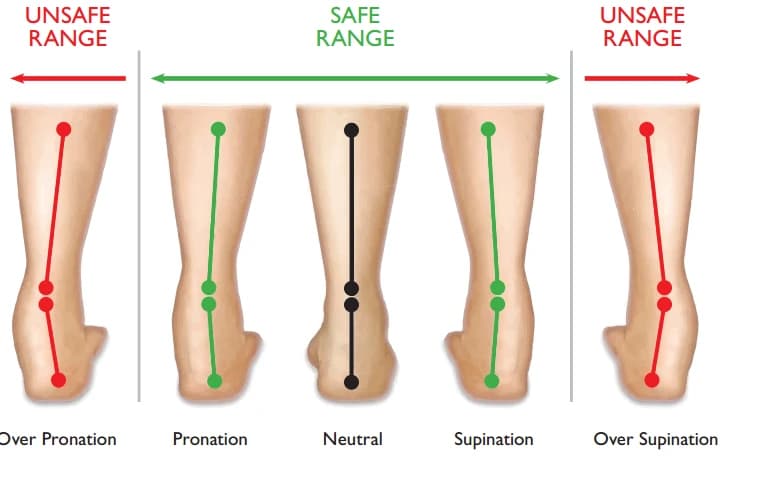
Pronation is the normal inward roll of your foot as it takes your weight. "Overpronation" describes an arch that flattens more, with the foot and leg rolling further inwards. This changes how forces travel through your feet and legs, and it can change the position of your knees and hips.
Oversupination is the opposite: the arches are high and you take more of your weight on the outside of your foot.
Testing your foot posture
You can get a rough idea of your foot posture at home. Stand up straight, barefoot, and ask someone to look at you from behind. If your ankles and knees lean inwards compared with your heels, your feet probably roll in (pronate). If they lean outwards, your feet may roll out (supinate).
This is only a rough guide. Your podiatrist can assess how your feet sit and move in much more detail.
What can help?
Stay active. Keeping active is the most effective way to manage common back pain. Resting your back can often make the pain worse.²
Footwear. High heels are often blamed for back pain because they're said to increase the curve in your lower back. The research doesn't clearly support this. Most studies don't find that high heels increase the curve, although the results are mixed.⁴ Very high heels do change how you stand and walk, and many people find them uncomfortable over a long day. For everyday wear, a shoe with a lower heel, a firm heel counter (the stiff back part that cups your heel) and a cushioned sole is a comfortable choice.
Orthoses. Orthoses (shoe inserts) can be off-the-shelf insoles from a pharmacy or shoe shop, or custom devices your podiatrist prescribes for your feet. They're mainly used for foot and leg problems. There isn't enough evidence that they prevent or treat low back pain,⁵ and UK guidelines advise against offering them for it.⁶ If you have foot pain as well as back pain, treating the foot problem can still be worthwhile in its own right.
When to see a doctor
Call triple zero (000) or go to an emergency department if your back pain came on suddenly and is severe, follows a significant injury or accident, comes with a fever or feeling unwell, stops you walking or moving, or comes with leg weakness or numbness, changes to your bladder or bowel, or unexplained weight loss.²
See your doctor if your back pain isn't getting better after about 6 weeks, or is affecting your sleep or daily activities.²
How a podiatrist can help
If you have foot, ankle or leg pain along with back pain, our podiatrists can assess how your feet and legs work and treat the foot problem. We'll be honest about what this can and can't do for your back. Where your GP or a physiotherapist is the better person to see for the back pain itself, we'll tell you.
If your feet are sore, book an appointment with our team at Foot Ankle Lower Limb.
References
- Australian Institute of Health and Welfare (2024). Chronic musculoskeletal conditions: back problems. https://www.aihw.gov.au/reports/musculoskeletal-conditions/back-problems
- Healthdirect Australia (2024). Back pain. https://www.healthdirect.gov.au/back-pain
- Menz HB, Dufour AB, Riskowski JL, et al. (2013). Foot posture, foot function and low back pain: the Framingham Foot Study. Rheumatology, 52(12), 2275–2282. https://doi.org/10.1093/rheumatology/ket298
- Russell BS (2010). The effect of high-heeled shoes on lumbar lordosis: a narrative review and discussion of the disconnect between Internet content and peer-reviewed literature. Journal of Chiropractic Medicine, 9(4), 166–173. https://doi.org/10.1016/j.jcm.2010.07.003
- Chuter V, Spink M, Searle A, Ho A (2014). The effectiveness of shoe insoles for the prevention and treatment of low back pain: a systematic review and meta-analysis of randomised controlled trials. BMC Musculoskeletal Disorders, 15, 140. https://doi.org/10.1186/1471-2474-15-140
- National Institute for Health and Care Excellence (2016, updated 2020). Low back pain and sciatica in over 16s: assessment and management (NG59). https://www.nice.org.uk/guidance/ng59
Reviewed by Andrew Schox, Podiatrist, BSc(Hons) PGradDipPod MPod. Last reviewed October 2026.
Need Professional Podiatry Care?
Our experienced team is here to help with all your foot and ankle concerns. Book an appointment today for expert diagnosis and treatment.
Book an AppointmentRelated Articles

Cortisone injections: relief for foot and ankle pain
A cortisone injection can calm a painful joint, bursa or nerve within days, and the relief often lasts weeks to months. It works best as one part of a wider treatment plan.
Why are my toenails unsightly?
Thick, discoloured or misshapen toenails are common. Fungal infection, injury, ageing, skin conditions and ingrown nails are the usual causes, and most can be treated or managed.
Why do I get calf muscle cramps?
Calf cramps are common and usually harmless, often linked to tired muscles, exercise or age. Cramping pain that comes on with walking and eases with rest is different and needs checking.