
In-toed gait
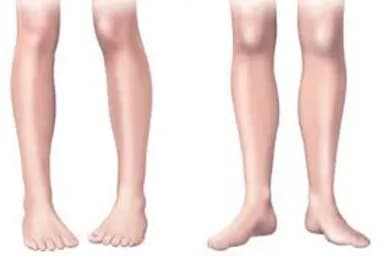
In-toeing, or walking with the feet turned in, is common in young children and usually gets better on its own as they grow. Most children don't need any treatment.
In-toeing is when a child's feet turn inwards when they walk. It's also called being "pigeon-toed".¹ If you've noticed it in your child, you're not alone: it's a common reason parents bring young children to see us. The most important thing to know is that in most children it improves on its own as they grow, and no treatment is needed.¹,²
What is in-toeing?
Most people walk with their feet pointing straight ahead. Children who in-toe walk with one or both feet pointing inwards.¹ It's most common in babies and young children.³
In most children, in-toeing gets better by around 8–10 years of age. It doesn't usually affect physical activity, and it doesn't make problems like arthritis or back pain more likely later in life.¹ Some people still in-toe a little as adults, but this rarely seems to cause major problems.²
What causes it?
There are three common causes, and each tends to show up at a different age.²,³
- Babies: metatarsus adductus. The front of the foot curves inwards. Most cases improve without treatment.¹
- Toddlers: internal tibial torsion. The shin bone (tibia) is twisted inwards, often because of the baby's position in the womb. The bone straightens as your child grows, and the twist is usually gone by around school age.¹
- School-age children: femoral anteversion. The thigh bone (femur) twists inwards. This usually improves slowly, by about 9–10 years of age.¹
Children with femoral anteversion often like to sit in a "W" position on the floor. There's no evidence that sitting habits cause in-toeing or make it worse.³
Less often, in-toeing can be linked with another problem, such as tight or stiff muscles from a nerve condition.² That's one reason an assessment is worthwhile if you're worried.
Signs and symptoms
You may notice that your child:
- walks or runs with their toes pointing in
- trips more often than other children, especially when running¹
- looks a little awkward when they run.
The tripping usually settles as children grow.¹ Pain isn't a typical feature, so if your child has pain, get it checked.
What can help?
Watching and waiting. For most children, the best treatment is time. In-toeing usually improves as the bones grow into position.¹ Trying to change the way your child walks or sits won't help, and it can cause stress and worry for both of you.¹
Shoes, braces and orthoses. Special shoes, braces and orthoses (shoe inserts) don't correct the twist in the bones for typical in-toeing.³ There's weak evidence that gait plates, a type of insert designed to encourage the foot to point straighter, may help some children.⁴ We may suggest them for an older child whose tripping is getting in the way of play or sport, but we'll be clear about what they can and can't do.
Babies with a stiff or severe foot curve. A small number of babies with severe metatarsus adductus need a brace, special shoes or a series of plaster casts in early childhood, ideally before they start walking.¹,³
Surgery. Surgery is rarely needed. It's only considered for children older than about 8 with a severe twist that causes real problems.³
What to expect at FALL
Your podiatrist will ask about your child's birth, growth and development, and whether in-toeing runs in the family. We'll examine their hips, legs and feet and watch them walk and run. We can also record your child's walking on our treadmill gait analysis system, which is useful for comparing how things change over time. Most of the time we can reassure you and check in again later. If anything looks unusual, we'll refer you to your GP or a specialist.
When to see a podiatrist
Have your child checked if:
- only one foot or leg turns in²
- the in-toeing is severe, or is getting worse rather than better¹,²
- tripping is affecting your child's play, sport or school activities²
- they have knee pain²
- their feet seem stiff, or their muscles seem tight²
- you're worried about their walking or development.
If you'd like your child's walking checked, book an appointment with our podiatrists.
References
- Sydney Children's Hospitals Network (2026). Intoeing (pigeon toes) factsheet. https://www.schn.health.nsw.gov.au/factsheets/intoeing-pigeon-toes
- The Royal Children's Hospital Melbourne (n.d.). In-toeing (clinical guidance for health professionals). https://www.rch.org.au/ortho/for_health_professionals/In-toeing/
- Rerucha CM, Dickison C, Baird DC (2017). Lower extremity abnormalities in children. American Family Physician, 96(4), 226–233. https://www.aafp.org/pubs/afp/issues/2017/0815/p226.html
- Uden H, Kumar S (2012). Non-surgical management of a pediatric "intoed" gait pattern – a systematic review of the current best evidence. Journal of Multidisciplinary Healthcare, 5, 27–35. https://doi.org/10.2147/JMDH.S28669
Reviewed by Andrew Schox, Podiatrist, BSc(Hons) PGradDipPod MPod. Last reviewed October 2026.
Need Professional Podiatry Care?
Our experienced team is here to help with all your foot and ankle concerns. Book an appointment today for expert diagnosis and treatment.
Book an AppointmentRelated Articles

Cortisone injections: relief for foot and ankle pain
A cortisone injection can calm a painful joint, bursa or nerve within days, and the relief often lasts weeks to months. It works best as one part of a wider treatment plan.
Why are my toenails unsightly?
Thick, discoloured or misshapen toenails are common. Fungal infection, injury, ageing, skin conditions and ingrown nails are the usual causes, and most can be treated or managed.
Why do I get calf muscle cramps?
Calf cramps are common and usually harmless, often linked to tired muscles, exercise or age. Cramping pain that comes on with walking and eases with rest is different and needs checking.