
Laser treatment for fungal nail infections
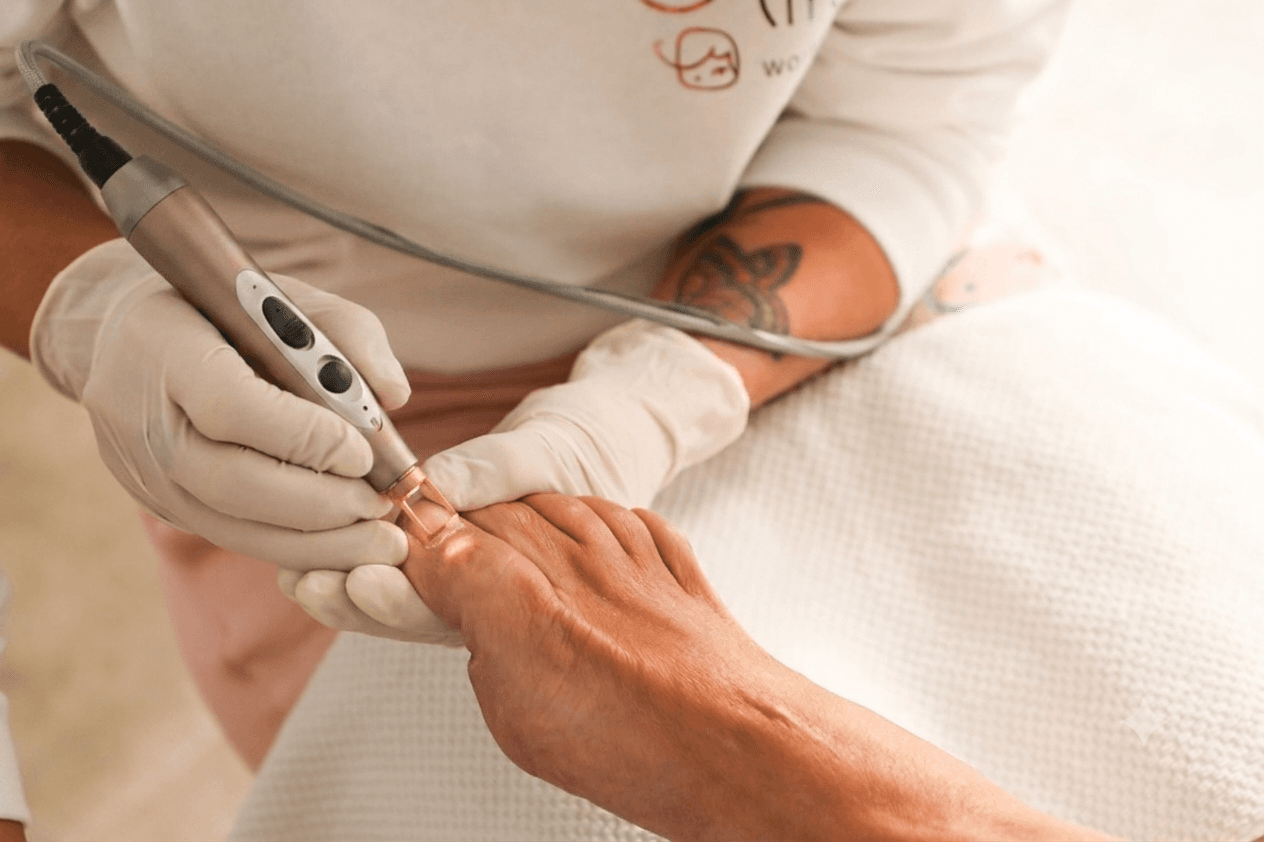
Laser can clear fungus and improve the look of an infected toenail, especially combined with an antifungal paint. Results depend on the laser used, and tablets remain the strongest single option.
A fungal nail infection (onychomycosis) can make a toenail thick, crumbly and yellow or brown, and it may lift away from the skin underneath.¹ These infections are common and stubborn. At Foot Ankle Lower Limb we offer laser treatment as one option. Here's how it works, what it can do, and how it compares with other treatments.
How does it work?
The laser shines an intense beam of light through the nail. The light heats the nail bed and the fungus underneath. The idea is that the heat damages the fungus while leaving the skin and nail unharmed. The laser passes over each nail several times, and the energy is adjusted for the size and thickness of the nail.
What can it help with?
Laser is used for fungal infections of the toenails. It can be an option for people who:
- can't take antifungal tablets, for example because of other health conditions or medicines
- would rather avoid tablets
- have tried nail paints or creams without success.
Does it work?
Laser can help many people, but results vary, and it works best as part of a plan.
- Laser on its own can clear the fungus from many treated nails and improve how the nail looks.² A full cure, where the nail looks completely normal and no fungus is left, is less common, and the strongest trials have mixed results.³,⁴
- Laser plus an antifungal nail paint or cream works better than the paint or cream alone, including for a full cure.⁵
- The laser matters. How well treatment works depends on the type of laser and how it's used.² Not all nail lasers are equal, so it's worth asking what device a clinic uses and how many sessions it recommends.
- Tablets are still the most effective single treatment for most people.¹ But they aren't suitable for everyone, for example if you have liver problems or take medicines that interact with them. For those people especially, laser is a good option.
Assessment is the key. Not every fungal nail infection responds well to laser. That's why we assess your nail first, and we only recommend laser when we think it's likely to work. When a nail is a good candidate, laser can work very well. If it isn't, we'll talk you through other options, including medicines, which some of our podiatrists can prescribe.
Is it safe?
Laser treatment is relatively safe.² You'll feel heat during treatment, which can be uncomfortable, and occasionally there's a little bleeding afterwards.² You don't need an anaesthetic, and you can wear socks, shoes and nail polish straight away.
What to expect at FALL
Assessment first. Before treatment we check your nails, your medical history, the feeling and circulation in your feet, and how likely treatment is to help. If you have diabetes or poor circulation, let us know, because these affect which treatment is safest. We may suggest testing a nail sample to confirm it's a fungus, because other problems can make a nail look thick and discoloured.
Treatment. We use a Fox laser. Most people have 2–4 sessions spread over 2–3 months, depending on how severe the infection is. Before treatment we may thin the nail to help the light reach the infection. You can carry on with normal activities straight after each session.
Be patient. Toenails grow slowly. Treatment can take months, and your nail may not look normal for several months after treatment ends.¹ Judge the result by the new nail growing through from the base.
Stopping it coming back. Fungal nail infections often return.¹ To lower the chance:
- keep your feet clean and dry, and your toenails short
- wear clean cotton socks, changed every day, and shoes that let air flow in
- wear thongs in public showers
- don't share nail scissors or shoes¹
- treat athlete's foot early, so the fungus has less chance to spread.
If you have a thick or discoloured toenail and want to know your options, book an appointment with our podiatrists.
References
- Healthdirect Australia (2024). Toenail infection. https://www.healthdirect.gov.au/toenail-infection
- Ma W, Si C, Kasyanju Carrero LM, et al. (2019). Laser treatment for onychomycosis: a systematic review and meta-analysis. Medicine (Baltimore), 98(48), e17948. https://doi.org/10.1097/MD.0000000000017948
- Yeung K, Ortner VK, Martinussen T, Paasch U, Haedersdal M. (2019). Efficacy of laser treatment for onychomycotic nails: a systematic review and meta-analysis of prospective clinical trials. Lasers in Medical Science, 34(8), 1513–1525. https://doi.org/10.1007/s10103-019-02802-8
- Foley K, Gupta AK, Versteeg S, et al. (2020). Topical and device-based treatments for fungal infections of the toenails. Cochrane Database of Systematic Reviews, 1, CD012093. https://doi.org/10.1002/14651858.CD012093.pub2
- Zhang J, Lin P, Li J, Guo C, Zhai J, Zhang Y (2022). Efficacy of laser therapy combined with topical antifungal agents for onychomycosis: a systematic review and meta-analysis of randomised controlled trials. Lasers in Medical Science, 37(6), 2557–2569. https://doi.org/10.1007/s10103-022-03561-9
Reviewed by Andrew Schox, Podiatrist, BSc(Hons) PGradDipPod MPod. Last reviewed October 2026.
Need Professional Podiatry Care?
Our experienced team is here to help with all your foot and ankle concerns. Book an appointment today for expert diagnosis and treatment.
Book an AppointmentRelated Articles
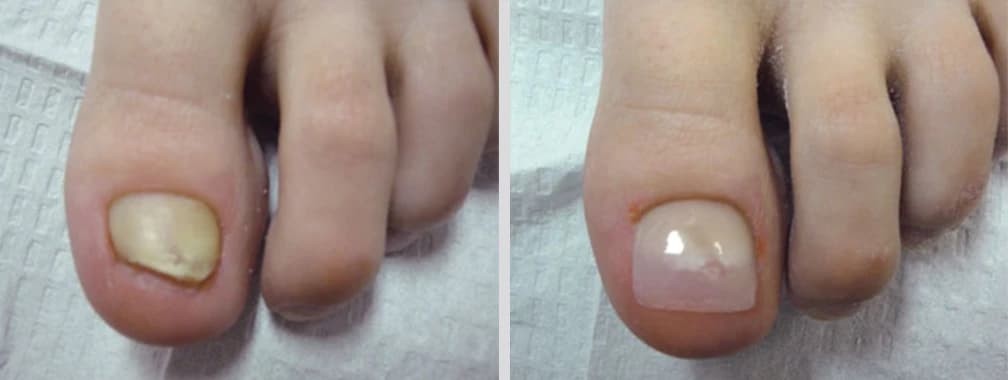
Introducing new nail technology at FALL
We offer two non-surgical nail options: Onyfix, a nail brace that can help ingrown or curved toenails, and Keryflex, a cosmetic nail restoration for damaged nails.
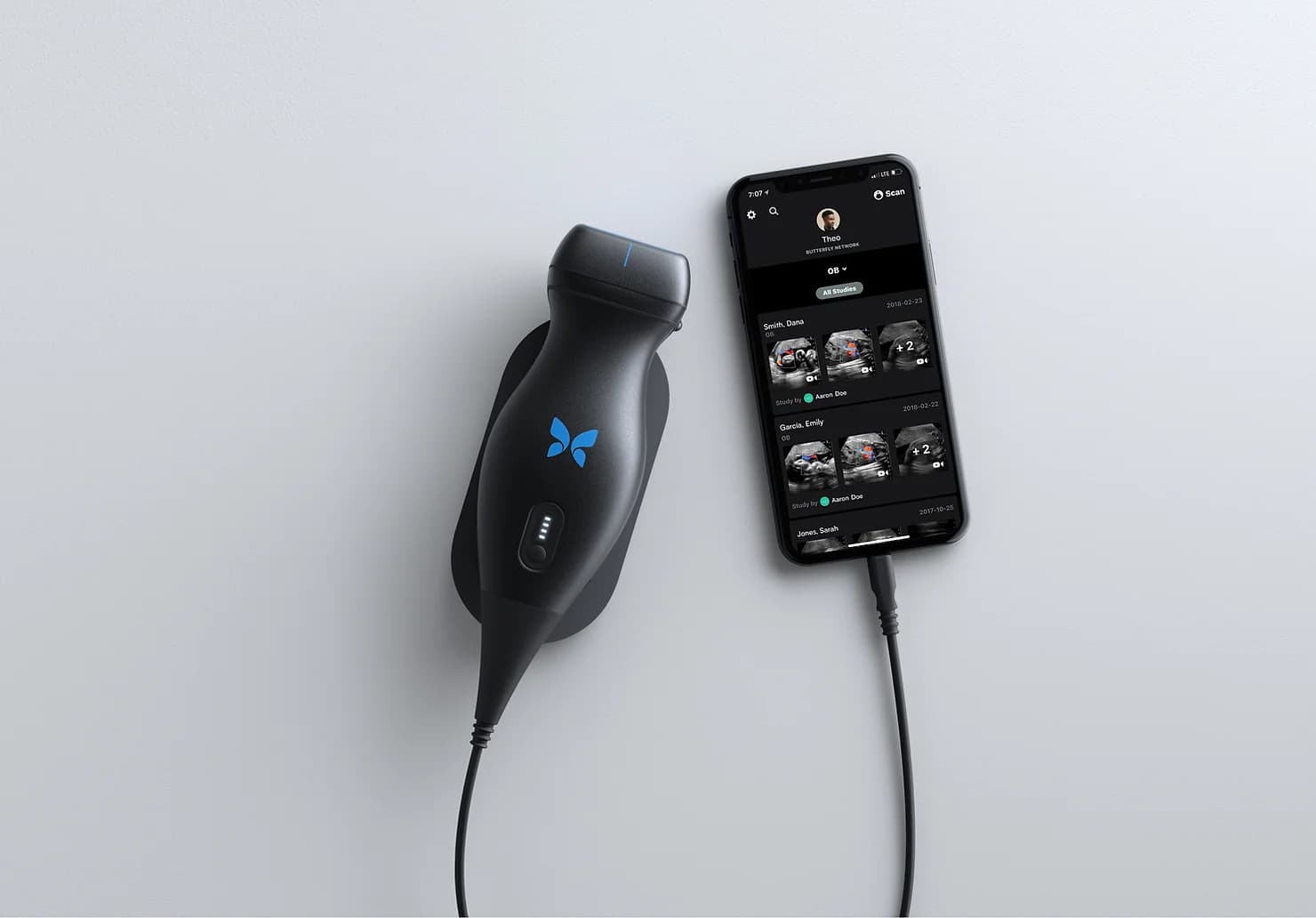
Diagnostic Ultrasound at FALL
We use a handheld ultrasound in the consulting room to look at tendons, the plantar fascia and other soft tissues while you're with us. It's painless and uses no radiation.
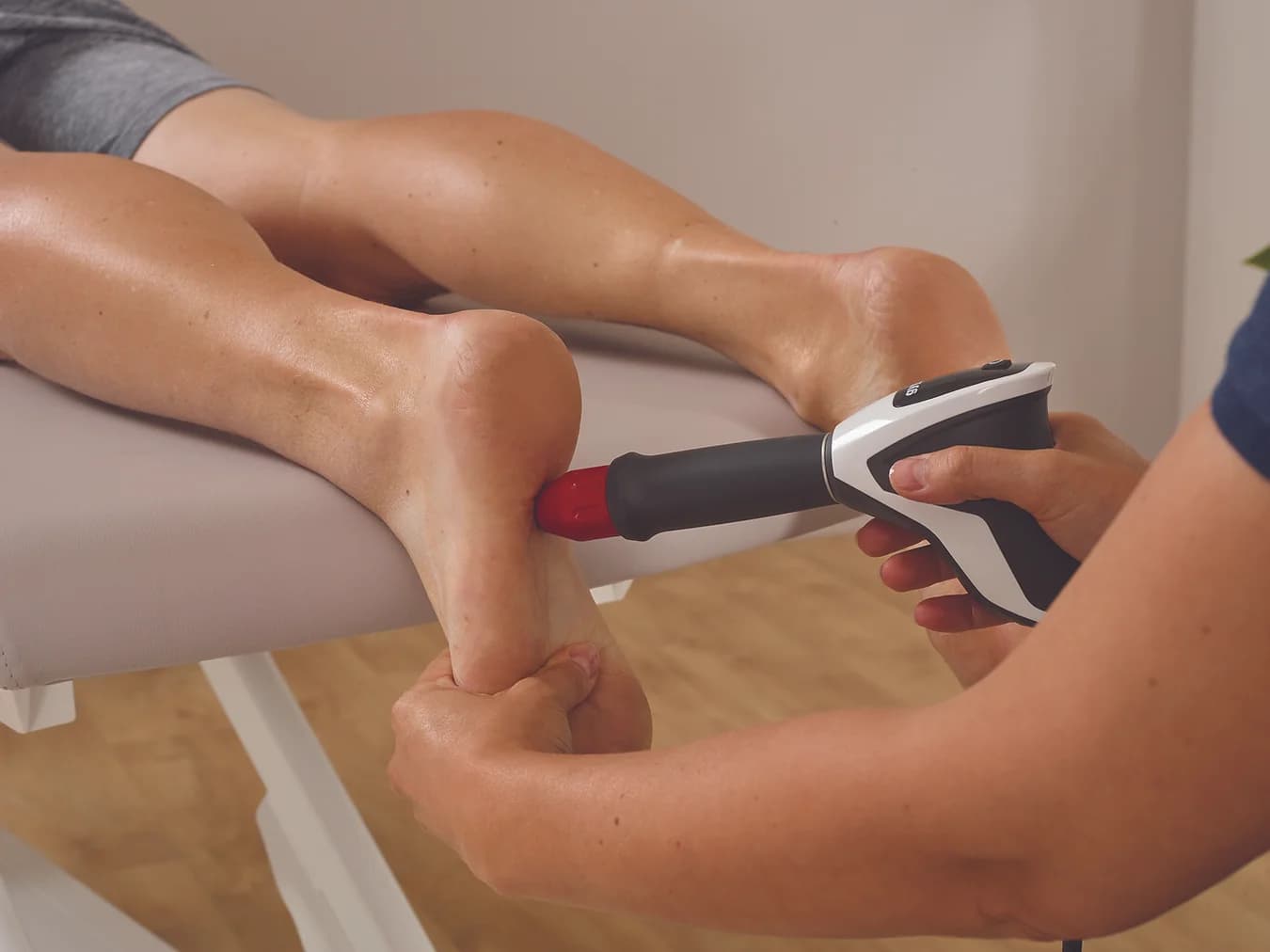
Shockwave therapy: a solution for chronic musculoskeletal conditions?
Shockwave therapy can help long-standing heel pain and Achilles tendon pain, especially alongside exercise. It isn't a cure-all, and the evidence for other conditions is weaker.