
Pros and cons of custom orthotics versus off-the-shelf orthotics
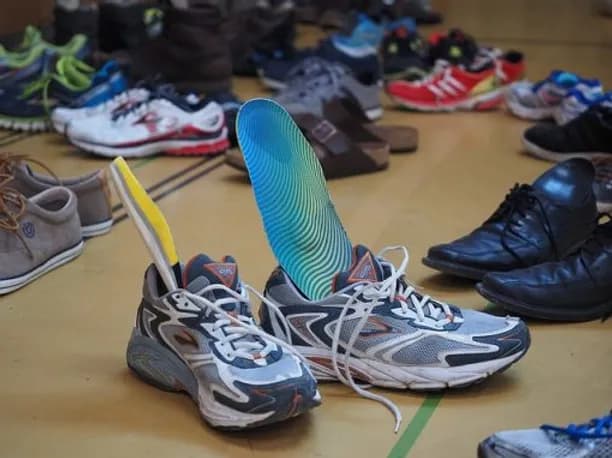
For many common problems, such as heel pain, off-the-shelf orthotics work about as well as custom ones. Custom orthotics earn their place when your foot or condition needs something specific.
Orthotics (foot orthoses) are shoe inserts that support the feet and change how pressure is spread under them.¹ You can buy them ready-made, or have them made to fit your feet. Custom orthotics cost more, so it's fair to ask whether they're worth it. The honest answer is that it depends on your feet and what's causing the problem.
What can orthotics help with?
Podiatrists use orthotics for a range of problems, including heel pain, tendon pain, corns and calluses, recurring ankle sprains, stress fractures, pain at the front of the knee, and to protect skin at risk of ulcers.¹
They help some conditions more than others. For heel pain (plantar fasciitis), orthotics can ease pain a little over the first few months, but the benefit is modest and may not last.²,³ Orthotics also seem to lower the chance of some injuries, such as stress fractures, in people who do a lot of physical training.⁴ Soft, shock-absorbing insoles don't appear to prevent injuries.⁴
Off-the-shelf orthotics
Off-the-shelf (prefabricated) orthotics are made in standard shapes and sizes.
Pros
- They cost less.
- You can get them straight away.
- A podiatrist can often modify them to suit your foot, for example by adding a wedge or padding.¹
- For common problems such as heel pain, they work about as well as custom orthotics.²,³
Cons
- They're shaped for an "average" foot, so they may not suit an unusual foot shape.
- There are fewer options for materials and for fitting different shoes.
Custom orthotics
Custom orthotics are made from a plaster cast or a 3D scan of your feet,¹ to a prescription written by your podiatrist.
Pros
- They're made for the shape of your foot and the problem being treated.
- They can be designed for particular shoes, such as work boots, dress shoes or sports shoes.
- They can help where a standard shape doesn't fit well. Custom orthotics have been shown to ease foot pain in people with very high arches, painful bunions, and foot pain from rheumatoid arthritis or juvenile arthritis.⁵
Cons
- They cost more.
- You'll wait while they're made.
- For some common problems, there's no clear evidence they work better than a good off-the-shelf device.²,³,⁵
- You may need a follow-up visit for small adjustments.¹
Do custom orthotics work better?
Not always. For heel pain, custom and off-the-shelf orthotics give similar results.²,³ One trial found that custom insoles for heel pain did no better than a fake (sham) insole when both came with an exercise booklet.⁶ Orthotics work best as one part of a wider plan, not on their own.
Custom orthotics make more sense when your foot shape is unusual, when you have arthritis or a condition that changes the shape of your foot, when you need pressure taken off a specific spot, or when an off-the-shelf device hasn't helped.⁵
Orthotics are generally safe.⁵ Like new shoes, they can take a little getting used to.
How do I decide?
Think about:
- what's causing your pain, and how long you've had it
- the shape of your feet and the shoes you wear most
- how active you are
- your budget, including whether you have private health cover that includes orthotics.
A good starting point is an assessment, so the choice is based on a diagnosis rather than a guess.
What to expect at FALL
Our podiatrists start by working out what's causing your symptoms. If orthotics are likely to help, we'll tell you whether an off-the-shelf device (which we can modify) is enough, or whether custom orthotics are worth the extra cost. Orthotics are usually one part of a plan that also includes exercises and footwear advice.
If we recommend custom orthotics, we take a 3D scan of your feet, and they usually take about two weeks to make. We'll check the fit when you collect them and adjust them if needed.
When to see a podiatrist
See a podiatrist if foot, heel or leg pain lasts more than a few weeks, keeps coming back, or stops you doing what you enjoy. Get checked sooner if you have diabetes, poor circulation or numbness in your feet, as you need to take extra care with any insert that might rub.
To find out whether orthotics are right for you, book an appointment.
References
- Better Health Channel (2014). Foot orthoses. https://www.betterhealth.vic.gov.au/health/conditionsandtreatments/foot-orthoses
- Whittaker GA, Munteanu SE, Menz HB, et al. (2018). Foot orthoses for plantar heel pain: a systematic review and meta-analysis. British Journal of Sports Medicine, 52(5), 322–328. https://doi.org/10.1136/bjsports-2016-097355
- Landorf KB, Keenan AM, Herbert RD (2006). Effectiveness of foot orthoses to treat plantar fasciitis: a randomized trial. Archives of Internal Medicine, 166(12), 1305–1310. https://doi.org/10.1001/archinte.166.12.1305
- Bonanno DR, Landorf KB, Munteanu SE, Murley GS, Menz HB (2017). Effectiveness of foot orthoses and shock-absorbing insoles for the prevention of injury: a systematic review and meta-analysis. British Journal of Sports Medicine, 51(2), 86–96. https://doi.org/10.1136/bjsports-2016-096671
- Hawke F, Burns J, Radford JA, du Toit V (2008). Custom-made foot orthoses for the treatment of foot pain. Cochrane Database of Systematic Reviews, (3), CD006801. https://doi.org/10.1002/14651858.CD006801.pub2
- Rasenberg N, Bierma-Zeinstra SMA, Fuit L, et al. (2021). Custom insoles versus sham and GP-led usual care in patients with plantar heel pain: results of the STAP-study – a randomised controlled trial. British Journal of Sports Medicine, 55(5), 272–278. https://doi.org/10.1136/bjsports-2019-101409
Reviewed by Andrew Schox, Podiatrist, BSc(Hons) PGradDipPod MPod. Last reviewed October 2026.
Need Professional Podiatry Care?
Our experienced team is here to help with all your foot and ankle concerns. Book an appointment today for expert diagnosis and treatment.
Book an AppointmentRelated Articles
Simple shoe lacing techniques for comfort
How you lace your shoes changes how they fit. Simple lacing tweaks can ease pressure on wide feet, high arches and toenails, and stop your heel slipping.
Home workouts: keeping fit without a gym
You don't need a gym to stay fit. Bodyweight exercises at home can build real strength, and a few simple tricks make them harder as you get fitter.

Coronavirus (COVID-19): what we're doing
We follow infection control standards to keep our clinic safe. If you're unwell with cold or flu symptoms, please call us to move your appointment rather than coming in.