
Ultrasound therapy
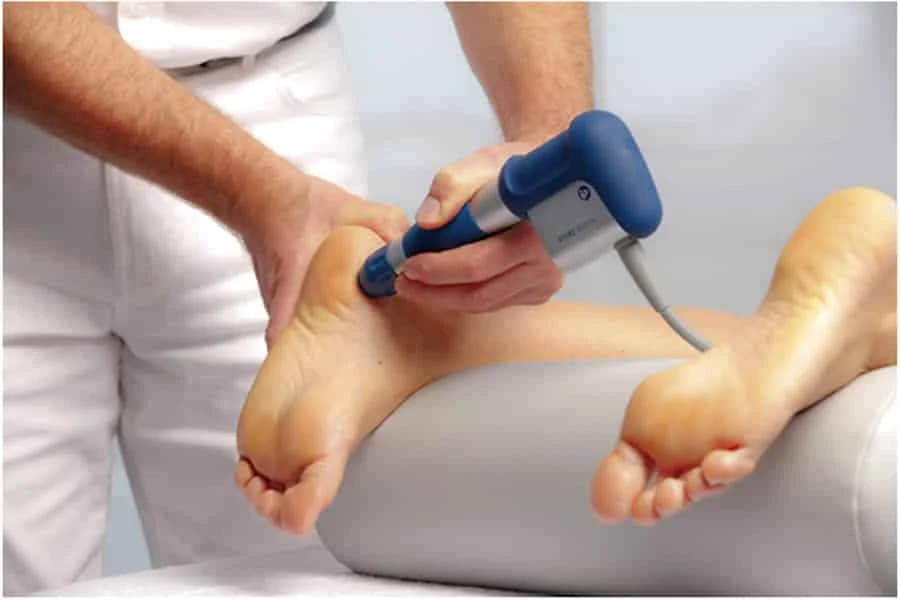
Therapeutic ultrasound sends sound waves into soft tissue to try to ease pain and help healing. It's safe, but for most foot and ankle problems it doesn't seem to help much.
Therapeutic ultrasound is a treatment that sends high-frequency sound waves into muscles, tendons and ligaments. It has been used by physiotherapists and podiatrists for more than 50 years to try to ease pain and help soft tissue injuries heal.¹ It's safe and painless, but the evidence that it actually helps is weak. Here's what it does and what you can expect from it.
Is it the same as an ultrasound scan?
No. An ultrasound scan (diagnostic ultrasound) uses sound waves to make a picture of what's under the skin. Therapeutic ultrasound uses a different machine and a stronger dose to deliver energy into the tissue as a treatment. A handheld Doppler, which uses ultrasound to listen to blood flow in the arteries of your feet, is different again. This post is about therapeutic ultrasound.
How does it work?
The treatment head contains a crystal that vibrates very quickly when electricity passes through it. This makes sound waves that are far too high-pitched to hear. Your podiatrist puts gel on your skin and moves the head slowly over the sore area for a few minutes. You may feel nothing at all, or mild warmth.
Ultrasound was first used to warm up deep tissues. It turns out it isn't very good at that, and other heat treatments do the job better.¹ Today it's mostly used at lower doses that don't heat the tissue. The idea is that the tiny vibrations stimulate cells involved in repair and speed up healing.¹ That theory comes mainly from laboratory studies, and it hasn't translated into clear benefits for patients.
What can it help with?
Ultrasound has been used for:
- ligament sprains, such as a sprained ankle
- muscle strains and spasm
- tendon pain
- heel pain (plantar fasciitis)
- slow-healing wounds and leg ulcers.
Does it work?
For most of these problems, ultrasound doesn't seem to work much better than a machine that is switched off.
- Ankle sprains: ultrasound doesn't speed recovery or reduce pain and swelling. Any benefit is probably too small to matter.²
- Heel pain: adding ultrasound to stretching doesn't make heel pain better, and treatment guidelines advise against using it for this purpose.³
- Muscle, tendon and joint problems in general: there is little evidence that ultrasound helps.⁴
- Leg ulcers: it's uncertain whether ultrasound helps venous leg ulcers heal, because the studies are small and of low quality.⁵
The treatments that do help most soft tissue injuries are simpler: the right amount of rest early on, then exercises that gradually load and strengthen the injured area, plus good footwear and, where needed, orthoses (shoe inserts).
Is it safe?
Ultrasound is very safe when it's used properly, and no harms have been reported in heel pain studies.³ There are some areas where it shouldn't be used. Ultrasound is not applied:
- over the lower back or tummy during pregnancy
- over a known or suspected cancer
- over an area with a blood clot (deep vein thrombosis) or active bleeding
- over the eyes, the front of the neck or the reproductive organs
- over a pacemaker or other electronic implant.⁶
In children, it isn't used directly over a growth plate that is still active.⁷ Metal implants such as plates and screws are not a reason to avoid it, but your clinician should take extra care with the settings.⁶,⁷
What to expect at FALL
At Foot Ankle Lower Limb, your podiatrist will assess your injury first and explain what's most likely to help. Because the evidence for therapeutic ultrasound is weak, we don't rely on it. If we do use it, it will only ever be a small extra alongside treatments that work better, such as a graded exercise program, footwear advice and orthoses. We'll tell you honestly if we think it's unlikely to make a difference for you.
If you have a sprain, strain or tendon problem that isn't settling, book an appointment with our podiatrists in Booragoon.
References
- Watson T (2008). Ultrasound in contemporary physiotherapy practice. Ultrasonics, 48(4), 321–329. https://doi.org/10.1016/j.ultras.2008.02.004
- van den Bekerom MPJ, van der Windt DAWM, ter Riet G, et al. (2011). Therapeutic ultrasound for acute ankle sprains. Cochrane Database of Systematic Reviews, 2011(6), CD001250. https://doi.org/10.1002/14651858.CD001250.pub2
- Koc TA, Bise CG, Neville C, et al. (2023). Heel pain – plantar fasciitis: revision 2023. Journal of Orthopaedic & Sports Physical Therapy, 53(12), CPG1–CPG39. https://doi.org/10.2519/jospt.2023.0303
- van der Windt DAWM, van der Heijden GJMG, van den Berg SGM, et al. (1999). Ultrasound therapy for musculoskeletal disorders: a systematic review. Pain, 81(3), 257–271. https://doi.org/10.1016/S0304-3959(99)00016-0
- Cullum N, Liu Z (2017). Therapeutic ultrasound for venous leg ulcers. Cochrane Database of Systematic Reviews, 2017(5), CD001180. https://doi.org/10.1002/14651858.CD001180.pub4
- Houghton PE, Nussbaum EL, Hoens AM (2010). Electrophysical agents: contraindications and precautions. An evidence-based approach to clinical decision making in physical therapy. Physiotherapy Canada, 62(5), 1–80. https://doi.org/10.3138/ptc.62.5
- Watson T (n.d.). Frequently asked questions. Electrotherapy on the Web. https://www.electrotherapy.org/faqs
Reviewed by Andrew Schox, Podiatrist, BSc(Hons) PGradDipPod MPod. Last reviewed October 2026.
Need Professional Podiatry Care?
Our experienced team is here to help with all your foot and ankle concerns. Book an appointment today for expert diagnosis and treatment.
Book an AppointmentRelated Articles
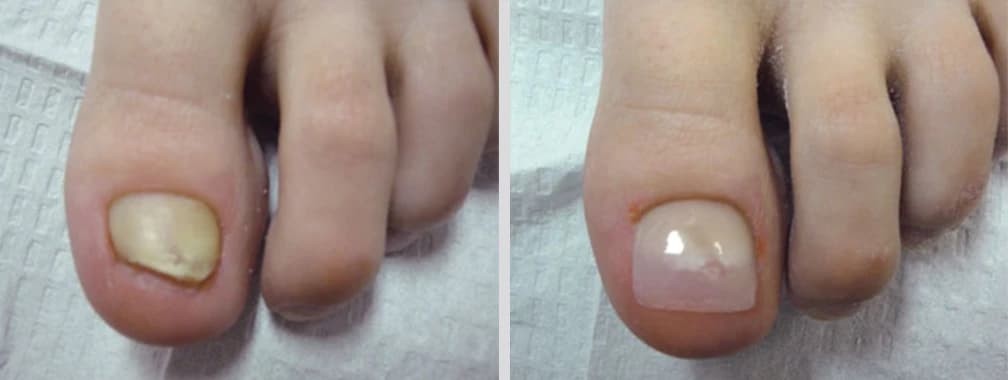
Introducing new nail technology at FALL
We offer two non-surgical nail options: Onyfix, a nail brace that can help ingrown or curved toenails, and Keryflex, a cosmetic nail restoration for damaged nails.
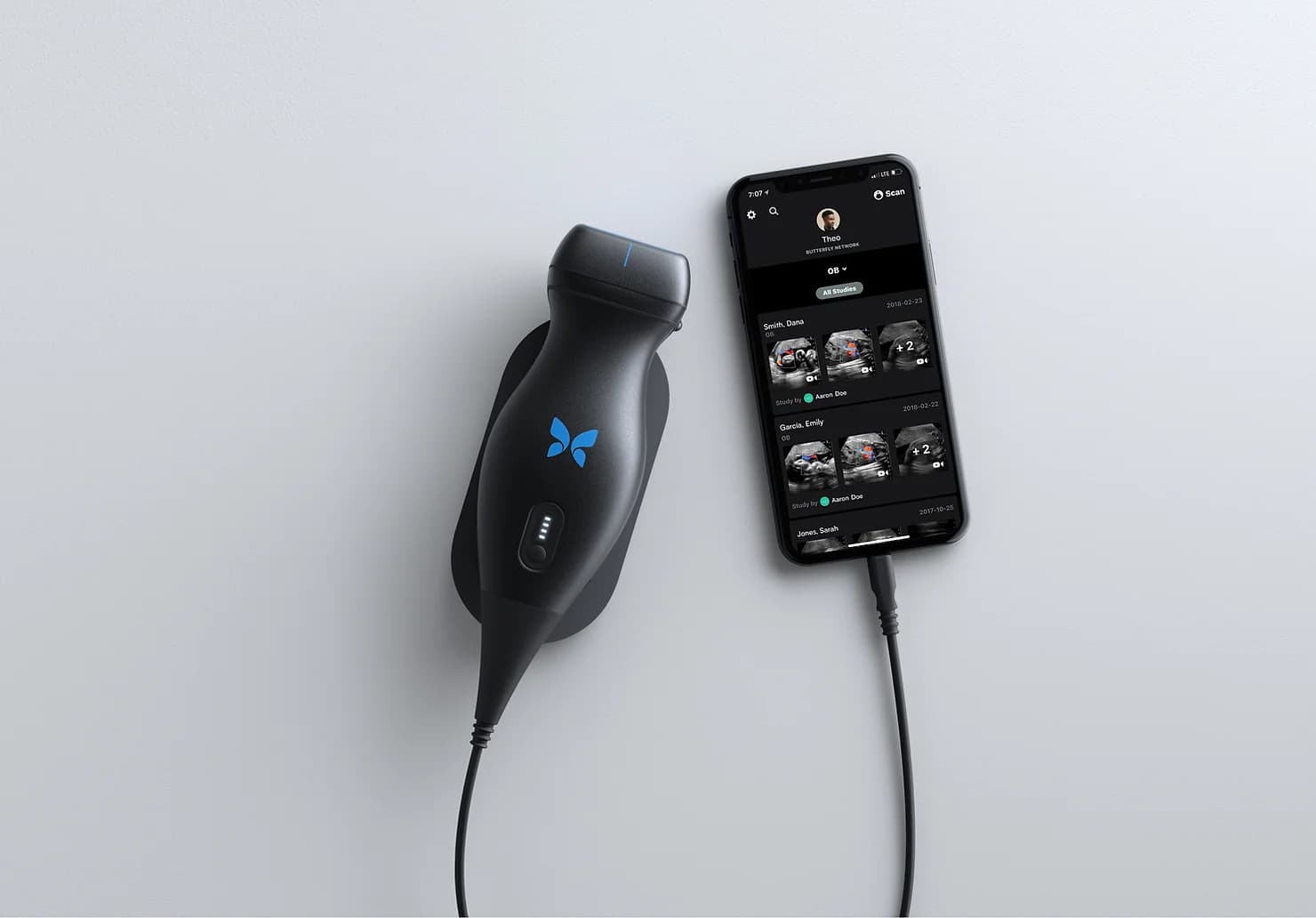
Diagnostic Ultrasound at FALL
We use a handheld ultrasound in the consulting room to look at tendons, the plantar fascia and other soft tissues while you're with us. It's painless and uses no radiation.
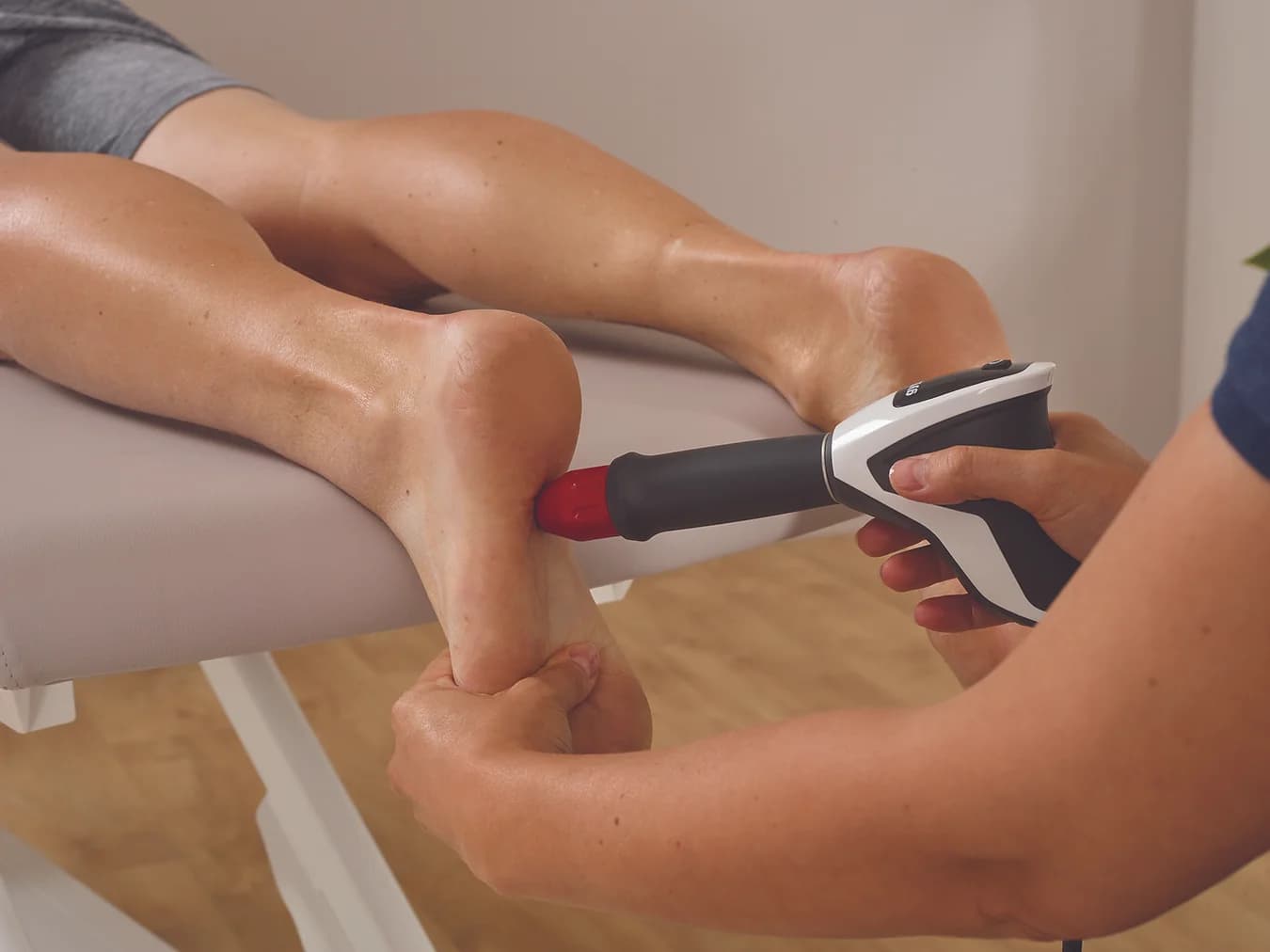
Shockwave therapy: a solution for chronic musculoskeletal conditions?
Shockwave therapy can help long-standing heel pain and Achilles tendon pain, especially alongside exercise. It isn't a cure-all, and the evidence for other conditions is weaker.