
Ingrown toenail treatment: 7 reasons to come to us
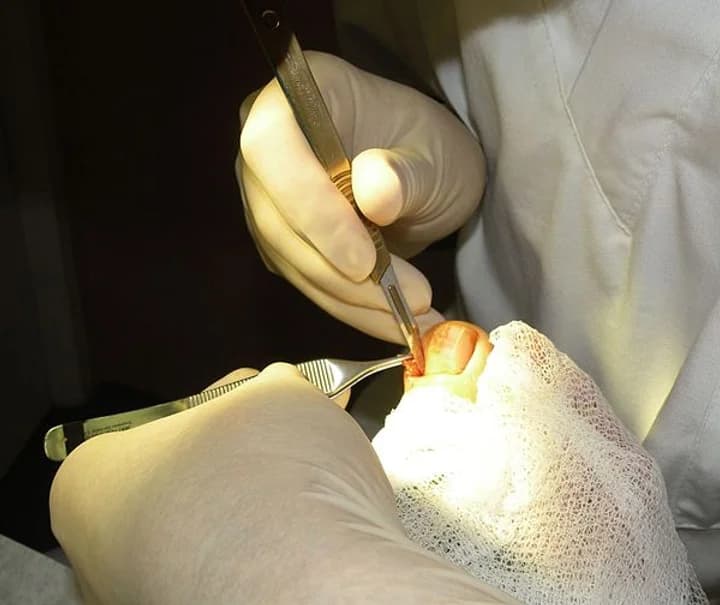
An ingrown toenail that keeps coming back or gets infected can usually be fixed with a quick procedure under local anaesthetic. Here's how we treat ingrown toenails at FALL.
An ingrown toenail happens when the side of the nail curls down and grows into the skin beside it. It most often affects the big toe, and it can become red, swollen, painful and sometimes infected.¹ If yours isn't settling, or keeps coming back, our podiatrists in Booragoon can help. Sometimes we can ease it on the spot. Other times a minor procedure is the best way to stop it returning.
Here are seven things to know about having your ingrown toenail treated at Foot Ankle Lower Limb.
1. Experience
Nail surgery is one of the most common procedures our podiatrists perform, and we're trained in a range of nail surgery techniques. We'll explain the options and help you choose the one that suits you.
2. A procedure to suit you
Not every ingrown toenail needs the same treatment. We can trim away the piece of nail that is digging in, or remove a strip down the side of the nail either temporarily or permanently. Removing the whole nail is possible,¹ but it usually isn't needed. If there's another problem under or beside the nail, such as a small bony lump, we'll talk with you about how best to manage it.
For a permanent fix, we remove the edge of the nail and apply a chemical (usually phenol) to the root, so that strip of nail doesn't grow back.³ Adding phenol probably makes an ingrown toenail less likely to return than cutting it out alone.⁴ No method works every time, though, and occasionally a nail edge regrows.³
3. Usually done in our rooms
Most nail procedures are done in our Booragoon rooms. The procedure itself usually takes about 10 minutes,³ and you go home soon afterwards. Some more involved procedures are done in a local hospital as a day patient.
4. Local anaesthetic
The procedure is done under local anaesthetic, which numbs the toe.²,³ We take care to make the injection as comfortable as possible. If you're nervous about needles, tell us; we can talk through options to help you relax. If you'd rather be asleep, we can arrange for the procedure to be done in hospital with an anaesthetist.
5. Pain afterwards
Most people have only mild pain afterwards. We'll advise you on simple pain relief such as paracetamol or ibuprofen, and many people find they need very little. Check with your pharmacist or GP that these medicines are suitable for you. We may also use a long-acting local anaesthetic, so your toe often stays numb for some hours after you leave.
Plan to rest with your foot up for the first few days so the swelling settles, and avoid sport and strenuous exercise for about 2 weeks.³
6. Infection
Infection after nail surgery is uncommon when the wound is looked after well, and we'll show you how. Taking antibiotics "just in case" after the procedure doesn't seem to lower the risk of infection.⁴ If an infection does develop, it usually settles with antibiotics.³ Contact us if your toe becomes more painful, red, warm or swollen, or if pus appears.¹
7. Aftercare
We give you the dressings you need, show you how to care for the wound, and see you once or twice afterwards to check it's healing well.
Can I treat it at home?
For a mild ingrown toenail, you can try soaking your foot in warm water for 15–20 minutes, 3 or 4 times a day, then gently pushing the skin away from the nail corner with a cotton bud.¹ Don't pick at the nail or try to cut it out yourself.¹ To help prevent ingrown toenails, cut your nails straight across, don't cut them too short, and wear shoes that fit well.¹,²
See a doctor or podiatrist promptly if the toe looks infected, or if you have an ingrown toenail and diabetes, poor circulation or nerve damage in your feet. Ingrown toenails are more likely to get infected in people with diabetes or circulation problems.¹
Summary
You don't need to put up with a painful ingrown toenail. Most can be treated quickly in our rooms under local anaesthetic, and a permanent procedure can stop the problem coming back. If you have questions or would like an assessment, book an appointment.
References
- Healthdirect Australia (2025). Ingrown toenails. https://www.healthdirect.gov.au/ingrown-toenails
- NHS (2025). Ingrown toenail. https://www.nhs.uk/conditions/ingrown-toenail/
- Healthdirect Australia (2026). Surgery for ingrowing toenail (adult). https://www.healthdirect.gov.au/surgery/surgery-for-ingrowing-toenail-adult
- Eekhof JAH, Van Wijk B, Knuistingh Neven A, van der Wouden JC (2012). Interventions for ingrowing toenails. Cochrane Database of Systematic Reviews, (4), CD001541. https://doi.org/10.1002/14651858.CD001541.pub3
Reviewed by Andrew Schox, Podiatrist, BSc(Hons) PGradDipPod MPod. Last reviewed October 2026.
Need Professional Podiatry Care?
Our experienced team is here to help with all your foot and ankle concerns. Book an appointment today for expert diagnosis and treatment.
Book an AppointmentRelated Articles

Simple shoe lacing techniques for comfort
How you lace your shoes changes how they fit. Simple lacing tweaks can ease pressure on wide feet, high arches and toenails, and stop your heel slipping.

Home workouts: keeping fit without a gym
You don't need a gym to stay fit. Bodyweight exercises at home can build real strength, and a few simple tricks make them harder as you get fitter.

Coronavirus (COVID-19): what we're doing
We follow infection control standards to keep our clinic safe. If you're unwell with cold or flu symptoms, please call us to move your appointment rather than coming in.