
How to look after your feet this summer

Summer is hard on feet. Use sunscreen on your feet, moisturise dry heels, save thongs for the beach and pool, and keep shoes on outdoors to avoid cuts, burns and tinea.
Perth summers are long and hot, and our feet spend more time out in the sun, in sand and in thongs than at any other time of year. A few simple habits can keep them comfortable and healthy until autumn.
Don't forget sunscreen on your feet
Feet are easy to miss when you put on sunscreen, and the tops of the feet burn quickly in sandals or thongs. Cancer Council recommends an SPF 50 or 50+ broad-spectrum, water-resistant sunscreen. Apply it 20 minutes before you go outside, and reapply at least every 2 hours and after swimming, sweating or towel drying.¹,² Remember the tops of your feet, your toes and, if you're lying on the beach, the soles too.
While you're at it, check the skin on your feet. Skin cancers can appear in places that don't get much sun, such as the soles of the feet, between the toes and under the nails.³ See your GP if you notice a new spot, or one that changes colour, size or shape.³
Look after dry, hard skin
Heat, sandals and bare feet can dry out the skin on your heels, which can build up into callus and crack. Moisturising your feet every day, including your heels, helps reduce dry skin and cracked heels.⁴ Don't put moisturiser between your toes.⁴ A pumice stone or foot file used gently and regularly helps keep hard skin under control.⁵ Closed shoes protect your heels better than open-backed sandals.
If you have diabetes, deep cracks in the heel can become infected, so get them checked promptly.⁴
Wear thongs for the right job
Thongs are handy, but they're not designed for long walks. They have little support, and people walk differently in thongs than in shoes.⁶ It isn't clear that this causes foot problems,⁶ but some people find their arches or heels ache after a long day in flat thongs. For walking any distance, a supportive, closed shoe is likely to be a better choice.⁶
Thongs are great at the beach, around the pool and in public showers and change rooms. Wearing them there helps protect you from tinea (athlete's foot), which spreads easily on wet floors.⁷
Keep your feet covered outdoors
Going barefoot feels good, but outside the house it exposes your feet to cuts, splinters and burns from hot sand, paths and pool surrounds. Rocks and sharp objects can hide in shallow water, so wear reef shoes or sandals when you're wading. If you have diabetes or numb feet, always wear protective footwear, even around the house.⁴
Keep feet dry and blister-free
Sweaty feet in summer can lead to tinea. Dry your feet well after swimming or showering, especially between the toes, and change your socks every day.⁷ Wear shoes and socks that let your feet breathe, and put wet shoes in the sun to dry properly.⁷
New summer shoes often rub. To help prevent blisters, wear shoes that don't rub, and choose socks that keep your feet dry.⁸ Ease into new sandals gradually.
When to see a podiatrist
See a podiatrist if you have:
- cracked heels that are painful or bleeding
- arch or heel pain that doesn't settle after a few weeks
- tinea that keeps coming back, or toenails that are thick or discoloured
- diabetes, poor circulation or numb feet, and any cut, blister or crack that isn't healing.⁴
To get your feet ready for summer, book an appointment with our podiatrists in Booragoon.
References
- Cancer Council Australia (2026). Advice on how to choose, apply and store sunscreen. https://www.cancer.org.au/cancer-information/causes-and-prevention/sun-safety/sunscreen/advice
- Cancer Council Australia (2026). Preventing skin cancer. https://www.cancer.org.au/cancer-information/causes-and-prevention/sun-safety/preventing-skin-cancer
- Cancer Council Australia (2026). Check for signs of skin cancer. https://www.cancer.org.au/cancer-information/causes-and-prevention/sun-safety/check-for-signs-of-skin-cancer
- National Diabetes Services Scheme (2026). Foot health and diabetes (fact sheet). https://www.ndss.com.au/about-diabetes/resources/find-a-resource/looking-after-your-feet-fact-sheet/
- NHS (2026). Corns and calluses. https://www.nhs.uk/conditions/corns-and-calluses/
- Chen TL, Wong DW, Xu Z, et al. (2018). Lower limb muscle co-contraction and joint loading of flip-flops walking in male wearers. PLoS One, 13(3), e0193653. https://doi.org/10.1371/journal.pone.0193653
- Healthdirect Australia (2025). Tinea. https://www.healthdirect.gov.au/tinea
- Healthdirect Australia (2023). Blisters. https://www.healthdirect.gov.au/blisters
Reviewed by Andrew Schox, Podiatrist, BSc(Hons) PGradDipPod MPod. Last reviewed October 2026.
Need Professional Podiatry Care?
Our experienced team is here to help with all your foot and ankle concerns. Book an appointment today for expert diagnosis and treatment.
Book an AppointmentRelated Articles
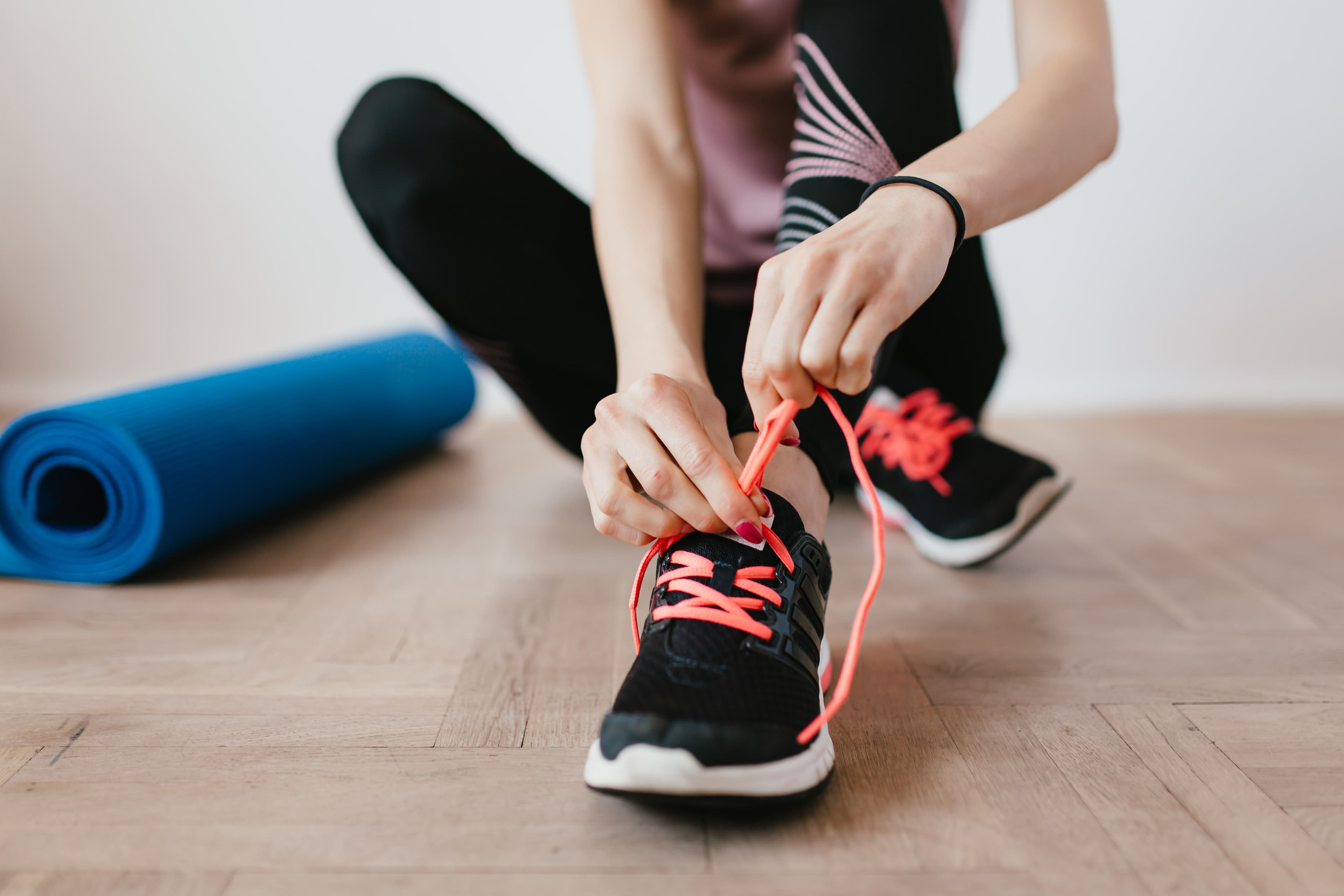
Simple shoe lacing techniques for comfort
How you lace your shoes changes how they fit. Simple lacing tweaks can ease pressure on wide feet, high arches and toenails, and stop your heel slipping.
Home workouts: keeping fit without a gym
You don't need a gym to stay fit. Bodyweight exercises at home can build real strength, and a few simple tricks make them harder as you get fitter.
Coronavirus (COVID-19): what we're doing
We follow infection control standards to keep our clinic safe. If you're unwell with cold or flu symptoms, please call us to move your appointment rather than coming in.