
Tips for accurate foot and ankle diagnoses
Searching your symptoms online can help you ask better questions, but it can't examine your foot. Here's how to use health information wisely and when to get a proper assessment.
When your foot hurts, it's natural to search your symptoms online. That can be a good start, but there are many possible foot and ankle problems, and several of them look alike. Most are treatable, and many can be prevented, but the right treatment depends on the right diagnosis. Here's how to use online information wisely and when to get your feet checked.
Why is self-diagnosis so tricky?
The foot and ankle are complex, and different problems can cause similar symptoms. Heel pain, for example, might come from the plantar fascia, a nerve, a stress fracture or the back of the heel bone. A thick, discoloured toenail might be a fungal infection, an injury or, occasionally, a bone growing under the nail. Each needs a different treatment.
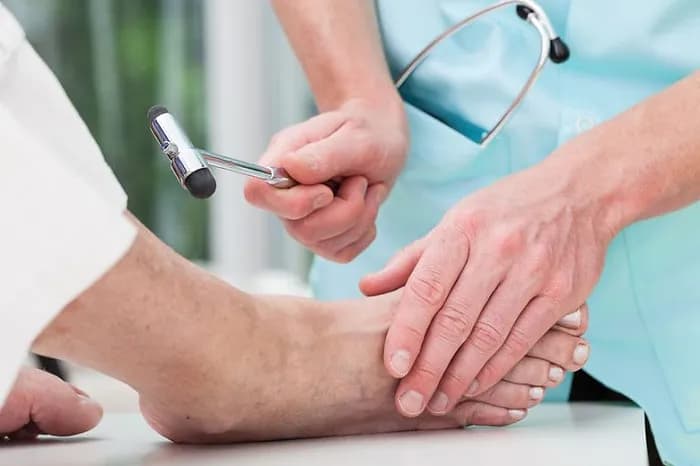
To tell these apart, a clinician looks at your history, examines your foot, watches how you walk and sometimes orders tests such as an X-ray or ultrasound. A website can't do any of that.
How do I find reliable health information?
The internet has a lot of health information, but not all of it is trustworthy, and it should never replace advice from a health professional.¹ When you read about a health problem online:
- check who wrote it and why. Government sites (ending in .gov.au) and recognised health organisations are good places to start.¹,²
- look for the evidence and the date. Reliable sites say where their information came from and when it was written or reviewed.²
- be wary of sites selling a product, asking for personal details or trying to make you feel scared.²
- remember that one study is only one study. Several large studies are more reliable than a single small one.²
Even good academic information can mislead without context. Research papers often describe rare conditions or unusual cases, and it's easy to see your own symptoms in them.
An example: a child with one leg longer than the other
Some parents notice that one of their child's legs looks longer or bigger than the other. An online search may bring up hemihyperplasia (also called hemihypertrophy), a rare condition where one side of the body grows more than the other. It can be worrying to read that children with this condition have a higher risk of some childhood cancers.³
Most children with a small difference in leg length don't have this condition. But because the possibility exists, a careful assessment matters. If hemihyperplasia is suspected, the child should be referred to a specialist in genetics or overgrowth conditions, and regular screening may be recommended.³ That's a decision for health professionals working with you, not something a search engine can make.
Make the most of your appointment
- Write down your symptoms: when they started, what makes them better or worse, and anything you've tried.
- Bring your usual shoes, and any orthoses or scans you already have.
- Bring along what you've read online. We're happy to talk it through with you.
- If something doesn't feel right, it's fine to ask for a second opinion.
When to see a podiatrist
See a podiatrist if foot or ankle pain lasts more than a few weeks, keeps coming back, or stops you doing what you enjoy. Get checked sooner if you have diabetes or poor circulation, if your child has a limp or a change in how they walk, or if you notice a lump, a sore that won't heal, or a change in the shape of your foot.
If you'd like a clear answer about your feet, book an appointment with our podiatrists in Booragoon.
References
- Good Things Australia (n.d.). Finding reliable health advice. https://goodthingsaustralia.org/learn-resource/finding-reliable-health-advice/
- Healthy Male (2024). How to find reliable health information online. https://healthymale.org.au/health-article/how-find-reliable-health-information-online
- Lukova M, Kadiyska T, Nossikoff A, et al. (2014). Case 2: A 20-month-old boy with asymmetric growth of the legs. Paediatrics & Child Health, 19(3), 123–125. https://doi.org/10.1093/pch/19.3.123
Reviewed by Andrew Schox, Podiatrist, BSc(Hons) PGradDipPod MPod. Last reviewed October 2026.
Need Professional Podiatry Care?
Our experienced team is here to help with all your foot and ankle concerns. Book an appointment today for expert diagnosis and treatment.
Book an AppointmentRelated Articles

Simple shoe lacing techniques for comfort
How you lace your shoes changes how they fit. Simple lacing tweaks can ease pressure on wide feet, high arches and toenails, and stop your heel slipping.

Home workouts: keeping fit without a gym
You don't need a gym to stay fit. Bodyweight exercises at home can build real strength, and a few simple tricks make them harder as you get fitter.

Coronavirus (COVID-19): what we're doing
We follow infection control standards to keep our clinic safe. If you're unwell with cold or flu symptoms, please call us to move your appointment rather than coming in.